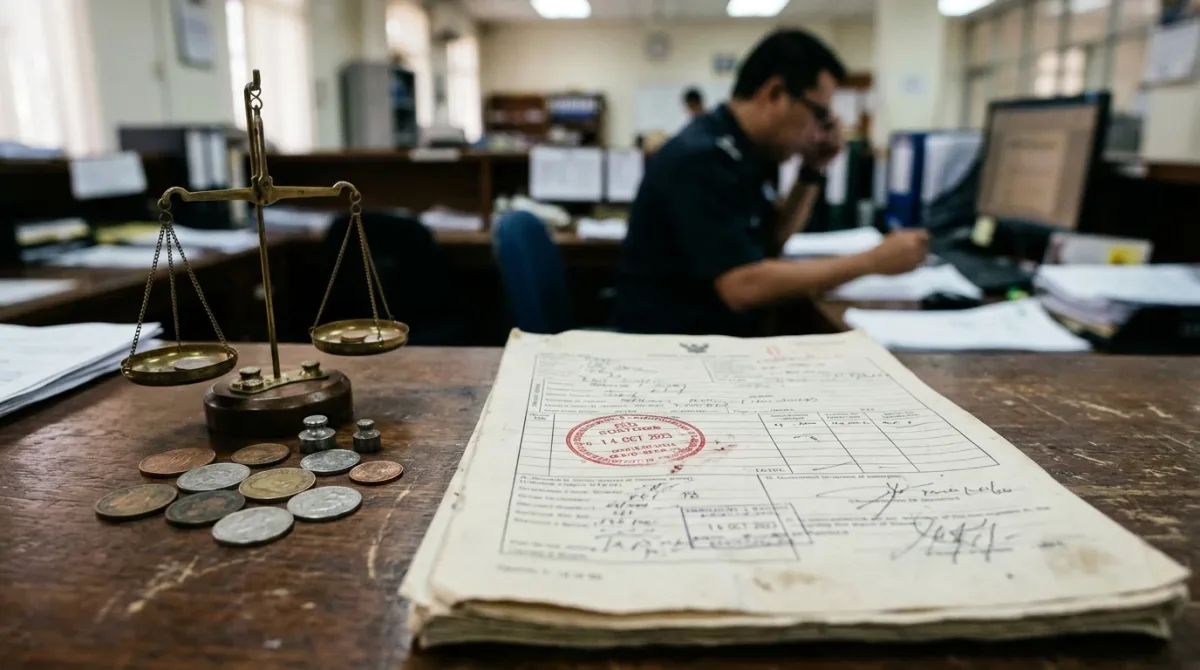
A countervailing duty investigation is a joint U.S. government inquiry that decides whether a foreign government subsidy to an exporter is harming a domestic industry, and if so, imposes an offsetting tariff — conducted under Title VII of the Tariff Act of 1930 by the Department of Commerce and the U.S. International Trade Commission (USITC), per the USITC's investigation process overview.
The result is not a policy announcement. It is a fact-finding process with statutory deadlines, two separate government determinations, and an enforcement mechanism that runs through U.S. Customs. Most readers encounter the outcome — a new duty on solar panels, steel, or shrimp — without seeing the machinery behind it.
What has to happen before an investigation opens?
Almost always, a domestic industry files a petition. Investigations are conducted, per the USITC glossary, "almost always on the basis of a petition filed with Commerce and the USITC on behalf of a domestic industry." The petition is filed with both agencies simultaneously, alleging that imports are benefiting from a subsidy — a government program that gives a foreign producer a financial advantage — and that the subsidized imports are hurting a specific U.S. industry.
From that point, the two agencies work in parallel but ask different questions.
Who decides the subsidy exists, and who decides it caused harm?
The split is structural, not incidental. Commerce determines whether a subsidy exists and calculates its size; the USITC determines whether the domestic industry has actually been hurt, per the USITC's process overview. A countervailing duty order can only issue when both agencies answer yes.
Globally, the same split traces back to the WTO's Agreement on Subsidies and Countervailing Measures, which sets the multilateral rules for when a member country may apply a countervailing duty. Per the U.S. Trade Representative's overview of countervailing duties, a measure may only be imposed "if an actionable subsidy is found to cause material injury to a domestic industry" — language the U.S. process mirrors by design, since the U.S. is a WTO member bound by the agreement.
How long does the process take?
The statute runs on fixed clocks, not case-by-case discretion.
| Phase | Standard deadline | What is decided |
|---|---|---|
| USITC preliminary phase | Usually within 45 days of the petition | Whether there is a "reasonable indication" of material injury |
| Commerce preliminary determination | Set by statute; can be extended | Whether a subsidy appears to exist, and its estimated rate |
| USITC final phase | Usually within 120 days of an affirmative Commerce preliminary finding (75 days if that finding was negative but the final is affirmative) | Whether material injury actually exists |
| Sunset review | No later than five years after an order issues | Whether revoking the order would let the subsidy and injury resume |
Those figures come from the USITC's own description of the process. A negative finding at either preliminary stage — from Commerce on the subsidy or the USITC on injury — ends the investigation before it reaches a final order.
What happens once duties are ordered?
Enforcement shifts to U.S. Customs and Border Protection (CBP), which collects the money. CBP "collects AD/CVD cash deposits, administers AD/CVD entries, assesses and collects final AD/CVD, and enforces AD/CVD on imports that evade AD/CVD orders," per CBP's own description of its role. Collection of cash deposits at a provisional rate begins once Commerce issues its preliminary determination, published in the Federal Register — well before the case is final.
Those provisional measures do not run indefinitely. Per CBP, provisional measures expire after 120 days in a standard countervailing duty case, extendable up to 180 days in antidumping cases. The final duty rate is often set later, through a separate administrative review process, and can differ from what importers paid as a deposit — CBP then bills for the difference or refunds the overpayment, with interest.
When does an investigation stop early?
- Negative preliminary injury finding. If the USITC finds no reasonable indication of injury within the 45-day window, the case ends immediately.
- Negligible import volume. Per the USITC's process description, imports representing less than 3% of the relevant merchandise volume are typically treated as negligible and the case is terminated for that country — unless several countries are investigated together and their imports, while individually under 3%, add up to more than 7% collectively, in which case those cases continue.
- Negative Commerce determination. If Commerce does not find a subsidy, there is nothing for the USITC to weigh, and the investigation closes.
- Sunset revocation. An existing order can be revoked at its five-year review if the agencies find that dumping or subsidization, and the resulting injury, would not resume.
The analysis:
The design — two agencies, two separate factual questions, statutory clocks — is meant to keep the subsidy finding and the injury finding independent of each other, so a duty order rests on two affirmative findings rather than one agency's judgment call. That structure also means a case can take the better part of a year to reach a final order even when both findings end up affirmative, and the final duty rate importers actually pay is often set later still, through administrative review — well after the trade press has moved on to the next petition. Readers evaluating a new countervailing duty case should treat the preliminary determination as provisional, not final: the number in the headline and the number that eventually clears at CBP are not guaranteed to match.
Frequently asked questions
- Can a countervailing duty investigation start without an industry petition? The USITC glossary notes petitions are the near-universal trigger; Commerce and the USITC can self-initiate, but per the USITC's own description this happens only rarely, with petitions the standard path.
- Who actually pays a countervailing duty? The U.S. importer of record pays it, as a cash deposit at the border collected by CBP, not the foreign government or the foreign producer directly.
- Can a company appeal a countervailing duty order? Yes. Per the USITC, determinations may be appealed to the U.S. Court of International Trade, or, in cases involving Canada or Mexico, to a binational panel under the USMCA.
- Does a countervailing duty order last forever? No. Per the USITC, the Uruguay Round Agreements Act requires a sunset review no later than five years after an order issues, to decide whether it should continue.
For a related economy news perspective, read How the Fed's Dollar Swap Lines Actually Work.