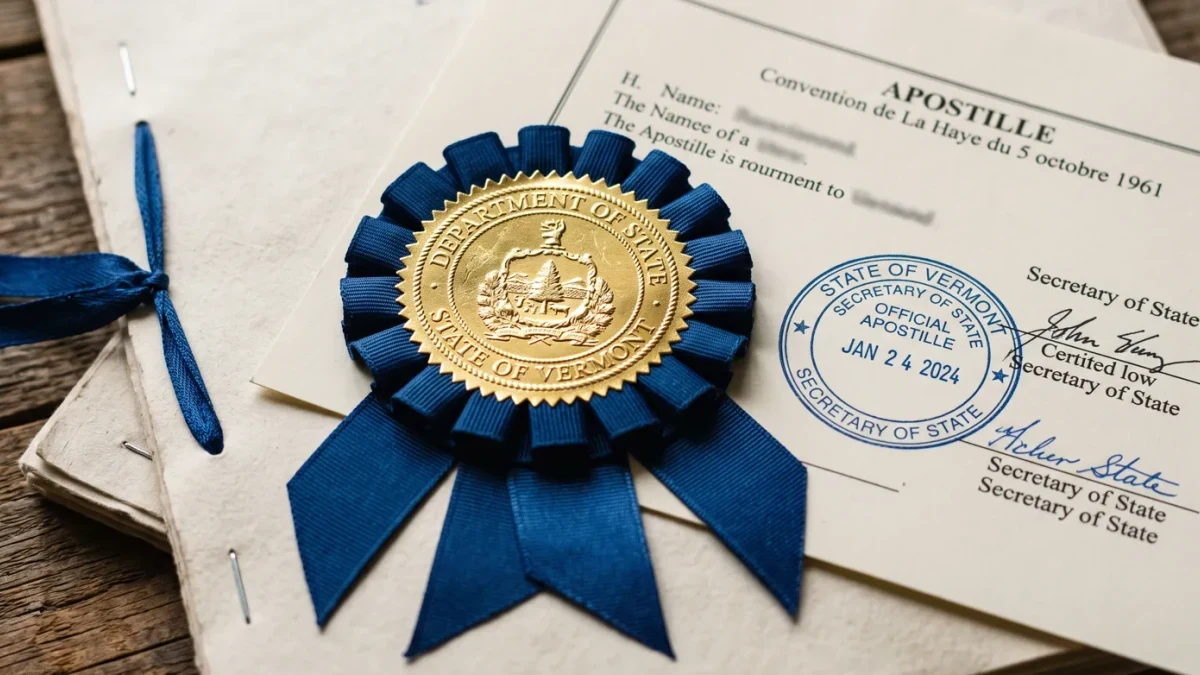
The Hague Conventions are a family of more than 40 multilateral treaties negotiated at the Hague Conference on Private International Law since 1893 — and, in the public-law branch, the 1899 and 1907 Hague peace conferences that codified the laws of war. Together they form the plumbing of international legal cooperation: the apostille that authenticates a document for use abroad, the rules deciding which country's courts hear a custody dispute, the channel by which a subpoena crosses a border. The apostille convention alone, in force for over 130 states, processes millions of certifications a year — the U.S. issuing officer's figure ran above two million apostilles annually before the pandemic's dip, per State Department tallies. This explainer maps the family and what each branch actually does.
What is the private-law branch?
The Hague Conference's treaties coordinate national legal systems rather than govern states. The 1961 Apostille Convention replaced chain legalization — document by document, consulate by consulate — with a single certificate; the 1980 Child Abduction Convention obliges states to return children wrongfully taken across borders by a parent, the treaty behind thousands of return cases each year in U.S. federal courts; the 1993 Intercountry Adoption Convention sets safeguards and central authorities for international adoption; the 2005 Choice of Court Convention makes selected courts' judgments predictable; the 2019 Judgments Convention extends recognition internationally. Each convention creates or uses central authorities — the national offices that send and receive requests — and their daily output is the unglamorous business of international legality.
What is the public-law branch?
The 1899 and 1907 peace conferences' conventions codified the laws of war: the Martens clause's minimum protections, rules on weapons, prisoners, and occupation that fed into the 1949 Geneva Conventions, and the Permanent Court of Arbitration, still casework-active. The later Hague institutions carry the name: the International Court of Justice sits in the Peace Palace since 1946 as the UN's principal judicial organ, deciding state-versus-state disputes; the International Criminal Court, a 1998 Rome Statute institution housed in the Hague since 2002, prosecutes individuals for genocide, crimes against humanity, war crimes, and — since 2018 activation — aggression. These are not Hague Conference products, but the city's legal ecosystem is one system in practice.
Which conventions touch ordinary people most?
Three. The apostille: any marriage, degree, or power of attorney used abroad in a convention state needs only the single certificate — a reform that replaced consular legalization chains that took weeks. The Child Abduction Convention: its return mechanism, operating through central authorities, decides where a custody case is heard, not who wins it — U.S. courts processed several hundred incoming and outgoing return requests in a typical recent year, per Hague Conference statistics. And the 1980 Evidence and 1965 Service Conventions, which move subpoenas and summonses across borders through designated channels — the machinery behind transnational litigation from divorce to antitrust.
How is compliance enforced?
Differently by branch. The private-law conventions rely on central authorities, mandatory cooperation, and national courts applying the treaty — the Child Abduction Convention famously gave itself no sanctions, and compliance runs through diplomatic pressure and the Hague Conference's own reviews, which have sanctioned nothing but published everything. The ICJ's judgments bind the parties under Charter Article 94, with Security Council enforcement theoretical since the veto blocks it — the 2022-2024 proceedings against Russia show judgments arriving and enforcement depending on politics. The ICC has no police: it relies on states to arrest, which is why several suspects, including sitting presidents, have traveled unarrested for years while 125 states parties owe the obligation.
What are the standing criticisms?
That the private-law machinery is slow and unequal — abducting parents forum-shop between convention and non-convention states; that the public-law institutions bind the willing — the United States, Russia, China, and India are not Rome Statute parties, and the ICJ's docket runs on consent; and that the Hague's quiet treaties struggle to keep pace with digital documents, the apostille's e-APP program being the running modernization effort. The analysis: the Hague system's method is coordination rather than government — it makes national systems interoperable instead of building a supranational one, which is why its private-law plumbing works daily while its public-law enforcement stays political. What would change the reading is broad ratification of the Judgments Convention or digital apostilles replacing paper wholesale, both in progress rather than complete.
Frequently asked questions
What is a Hague apostille?
A single certificate, issued by a designated authority under the 1961 Apostille Convention, that authenticates a public document for use in any of the 130-plus convention states. It replaces the old chain of consular legalizations with one stamp.
What does the Hague Child Abduction Convention do?
It requires the state where a child has been wrongly taken to return the child promptly so custody can be decided in the child's habitual residence. Central authorities in each state cooperate on requests; courts decide return, not custody merits.
Is the ICC part of the Hague Conventions?
No. The ICC was created by the 1998 Rome Statute and sits in the Hague, but it is separate from the Hague Conference's treaties and from the ICJ. Its jurisdiction covers individuals for the gravest international crimes where states cannot or will not act.
Why do the Hague Conventions matter outside courtrooms?
They make cross-border life administrable: documents recognized abroad, adoptions safeguarded, custody disputes channeled, evidence and summonses movable. Without them every border crossing of paper would need bespoke diplomacy.