When a crisis hits, the public sees press conferences. What it does not see is the quiet machinery underneath: small committees that meet before dawn, binders prepared months in advance, and plans for keeping a government running when its usual routines collapse. That machinery is what specialists mean by crisis management in government: the standing structures, pre-agreed procedures and prepared information that let a state make hard decisions fast.
The basic idea is simple. A crisis compresses time. Decisions that normally take weeks of cabinet papers and committee hearings must be made in hours. Governments that have thought about this in advance do not improvise; they activate. Governments that have not tend to make their worst decisions in their worst hours.
Why normal government cannot handle a crisis
Ordinary government is built for deliberation, not speed. As Encyclopaedia Britannica explains in its survey of government, a political system is the framework by which a country is administered and regulated — and that framework assumes routine: agendas, consultations, checks. Those checks are a feature. They slow decisions down so that rights are protected and mistakes caught.
A crisis breaks that bargain. Floods, financial panics, pandemics and security emergencies all share one trait: the cost of delay rises sharply with every hour. So governments build a second, faster track that operates only when the first one jams. Crucially, that second track still has to be lawful. In a constitutional state, even emergency powers trace back to a founding document — the White House notes that the US Constitution is the supreme law of the United States and the source of all government powers, along with the limits that protect citizens' rights.
Who sits in the room: emergency committees
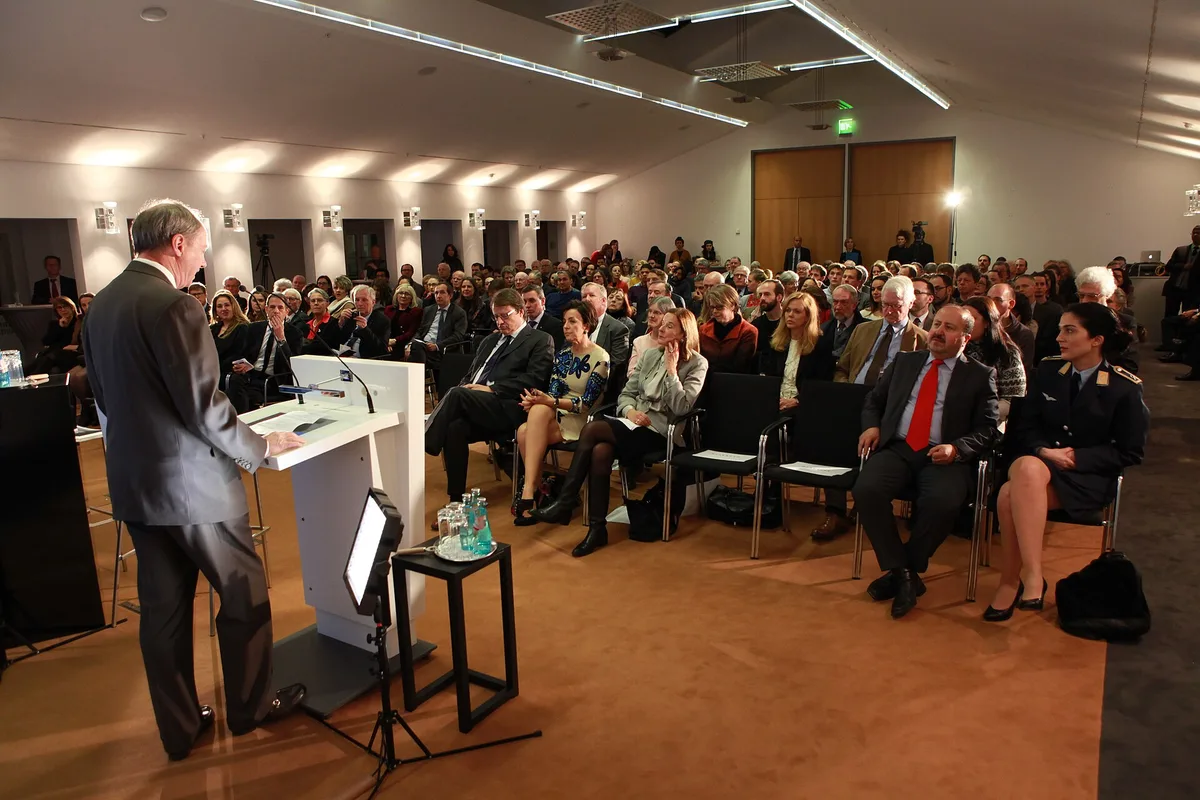
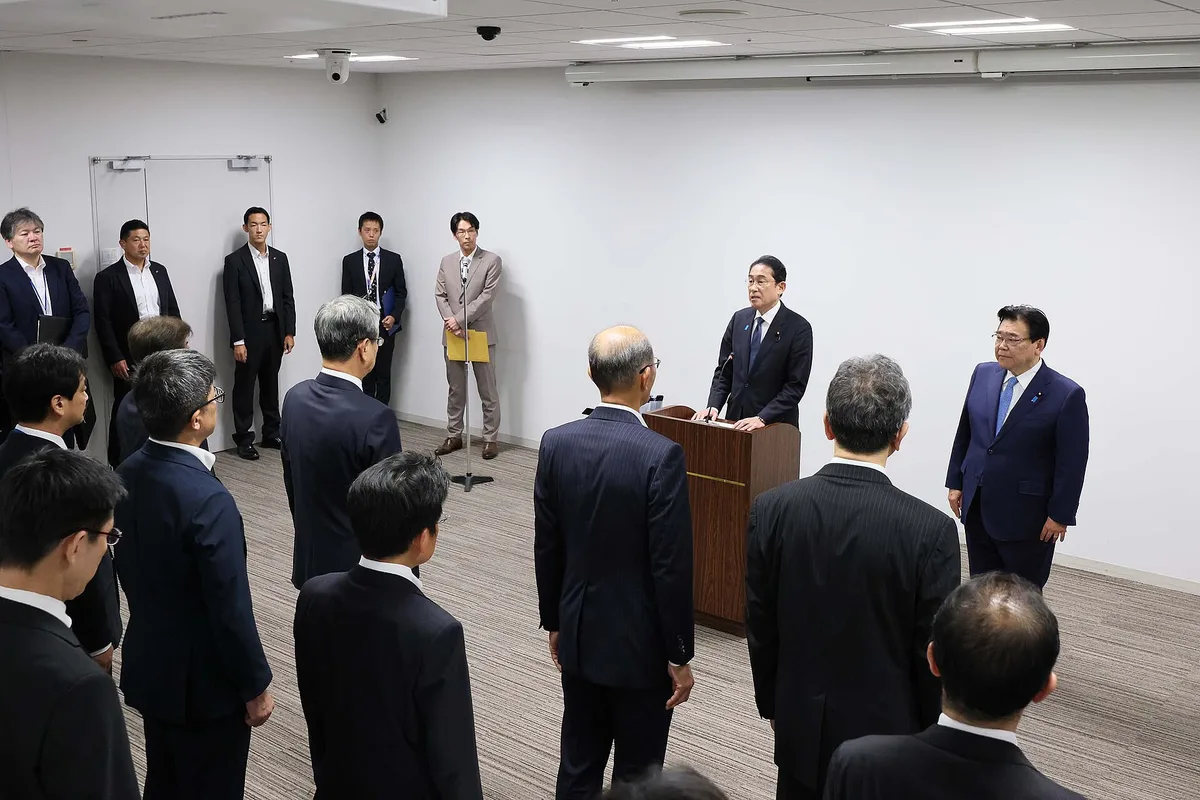
The core of most crisis machinery is a small decision group. Names vary by country — emergency committee, crisis cabinet, situation room, secure operations centre — but the design is similar. A handful of senior officials with real authority meet on a fixed rhythm, often several times a day at the height of an event.
Three roles matter more than the rest:
- The decision-maker — the head of government or a designated minister, empowered to commit the state without waiting for a full cabinet.
- The technical advisers — scientists, military officers, epidemiologists, market regulators, whoever the crisis demands. Their job is to say what is known, what is not known, and how confident anyone can be.
- The implementers — officials who turn a decision into instructions within hours: a border closure, an emergency payment, a public warning.
A well-run committee keeps these roles distinct. The classic failure mode is the opposite: technical advisers drifting into politics, or politicians drifting into technical questions. The record of past emergencies, reviewed repeatedly by official inquiries, points to the same lesson — decisions improve when the science is presented separately from the political judgement about it.
What is in the briefing book
Briefing books are the least glamorous and most important artefact of crisis government. They are prepared in peacetime, updated regularly, and designed so that a decision-maker can absorb the essentials in minutes.
A typical book contains maps and data on the affected population, a list of legal powers available and who can trigger them, contact trees for every agency, draft public statements ready to be edited rather than written from scratch, and a log of decisions already taken. That last item matters more than it sounds. In a fast-moving event, the single most common administrative failure is losing track of what was decided, when, and by whom. A decision log is what later allows an inquiry — or a court — to reconstruct events.
The same logic of preparation extends to international settings. Before a summit, delegations work through scenarios and agreed positions in advance, a process described in How Summit Diplomacy Prepares a G20 Meeting. Crisis rooms run on the same principle: most of the work happens before the meeting.
Continuity plans: government when government is disrupted
The hardest scenario is a crisis that disables the government itself. Continuity planning addresses this. Its premise is that the state's key functions — command authority, payments, communications, essential services — must survive even if leaders, buildings or networks do not.
Continuity plans typically cover three things. First, succession: who takes over if decision-makers are unavailable, defined in advance rather than argued about mid-crisis. Second, relocation and redundancy: alternate sites and systems so that a physical or cyber attack on one node does not stop the whole machine. Third, prioritisation: an explicit list of which functions must continue at all costs, because in a genuine emergency not everything can. For related coverage, see Parliamentary vs Presidential Systems: What Changes and Why.
How much of this is public varies enormously. Some states publish continuity frameworks so that citizens and businesses know what to expect. Others keep the details classified, on the argument that a plan's value collapses once its weaknesses are known. Both approaches have a defensible logic; the trade-off between transparency and security is permanent.
The accountability problem
Here is the tension that defines the whole field. Crisis management concentrates power, and concentrated power is exactly what constitutional government is designed to prevent. The US founders split authority into three branches with checks on each precisely because they feared unchecked power, as the White House history of the Constitution records. Emergency committees, by design, cut across those checks.
Mature democracies manage the tension rather than resolve it. Common safeguards include time-limited emergency powers that expire unless renewed, parliamentary or judicial oversight that continues operating, and a legal duty to publish the reasons for major emergency decisions. The system depends on one unwritten rule: the fast track is for speed, not for settling questions that were never really about the crisis.
The analysis: the quality of a state's crisis machinery is a decent proxy for its institutional health overall. States with clear succession rules, honest data flows and a habit of writing things down tend to manage emergencies well. States where information is filtered on its way upward, or where no one dares tell the leader bad news, tend to fail — and the failure usually shows up first in the closed room, long before it shows up in public. What would change that reading is evidence that formal structures alone predict performance; in practice, the culture inside the room appears to matter at least as much as the organogram.
What this means for citizens and investors
For readers who follow policy for practical reasons, three takeaways are worth carrying. One: watch which institutions are empowered in a crisis, because that tells you where real authority sits, whatever the formal chart says. Two: continuity and emergency frameworks affect markets — payment systems, energy supply and border rules are all crisis instruments, and their activation is information. Three: the safeguards matter as much as the powers. A government that can act fast and still be audited afterwards is more durable than one that can only do one of the two.
None of this machinery is secret in principle. Most of its components — committees, logs, succession rules, legal powers — are documented somewhere in the public record of almost every state. What is genuinely behind closed doors is usually not the structure but the judgement: who spoke, what was weighed, and why one option won. That is where the real work of crisis government happens, and it is why the paperwork prepared in calm weather is worth more than any decision made in a storm.