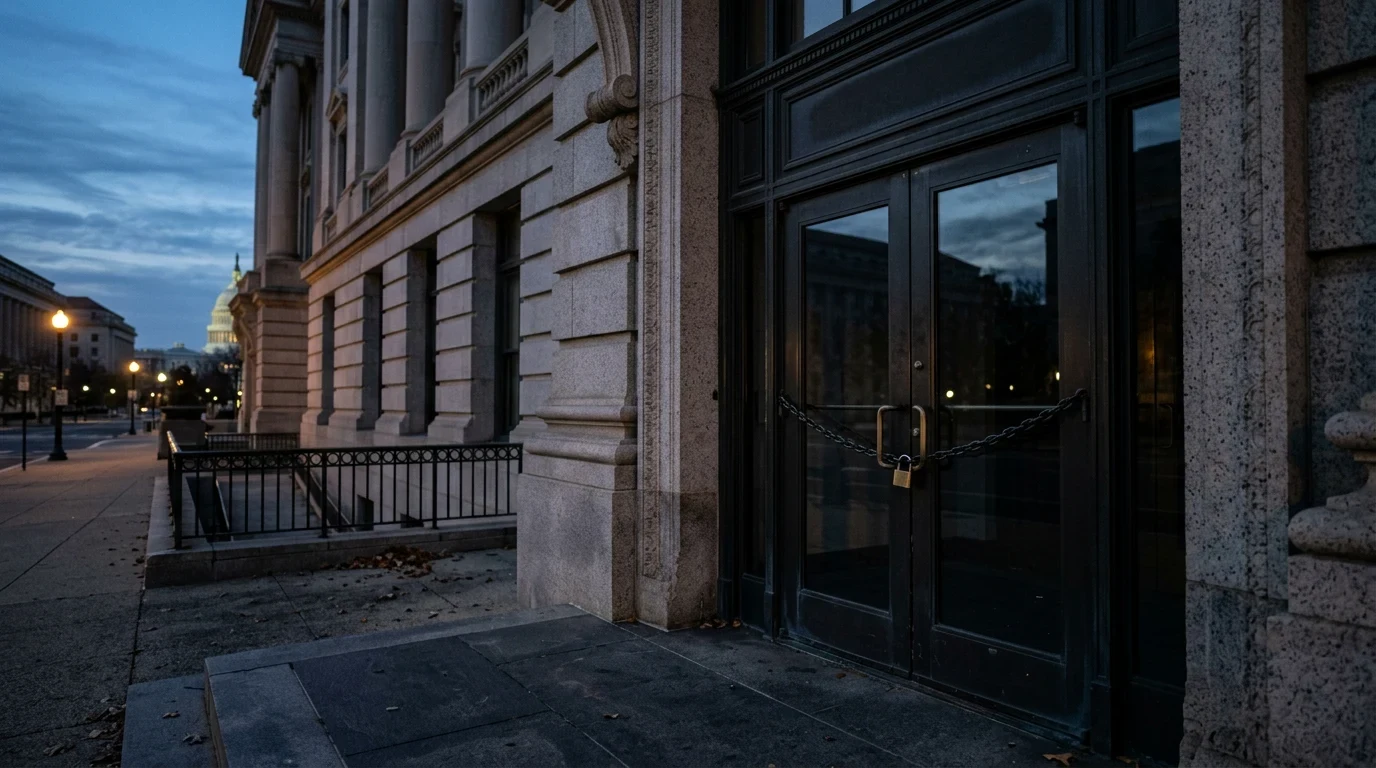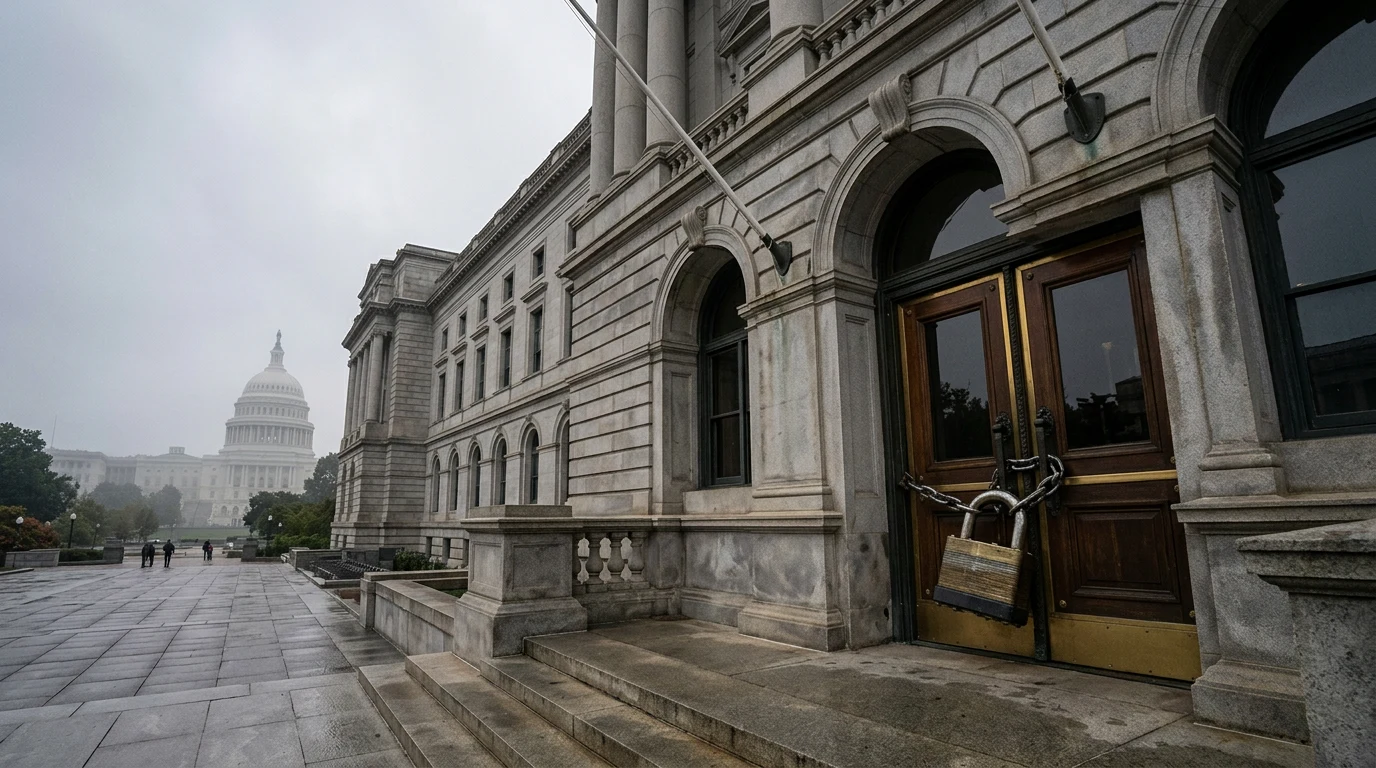
A federal government shutdown begins automatically when Congress and the president fail to enact new appropriations before existing funding expires, triggering restrictions under the Antideficiency Act that require most agencies to stop operating, per the U.S. Government Accountability Office. From fiscal year 1977 through fiscal year 2019, there were 20 such funding lapses lasting between one and 35 days, per GAO's appropriations-law guidance. The law's restrictions apply the same way whether a lapse results from a missed deadline or a deliberate political standoff.
What actually triggers a shutdown?
A shutdown is not a single new law but the absence of one. It occurs "between the expiration of one appropriation and enactment of a new one," typically at a fiscal year-end or when a stopgap continuing resolution runs out without a successor, per GAO's appropriations-law guidance. Congress funds the government either through the twelve annual appropriations bills or through continuing resolutions that extend prior-year funding levels on a temporary basis. When neither is enacted and signed before the funding clock runs out, the lapse takes effect immediately — there is no grace period built into the statute.
The trigger is procedural, not political: it does not matter whether the impasse stems from a dispute over policy riders, spending levels, or an unrelated legislative fight. Once appropriated budget authority expires, the legal consequences of the Antideficiency Act attach automatically.
What does the Antideficiency Act actually require?
The Antideficiency Act bars federal agencies from "incurring obligations or making payments in advance or in excess of an appropriation," which in practice means agencies must generally stop operations once their funding lapses, per GAO. The statute exists to protect Congress's constitutional control over spending by preventing the executive branch from running programs without authorized funds.
GAO applies a two-step test to determine what an agency can still do during a lapse: first, whether any appropriation remains legally available — such as multi-year funds, carryover balances, or permanent appropriations like those funding Social Security benefits — and second, whether a recognized exception to the Act applies, per GAO. Recognized exceptions cover work necessary to protect human life or government property, and the constitutional functions Congress and the president need to negotiate and enact new appropriations. Outside those categories, agencies cannot spend money, including on employee salaries, and cannot accept unpaid volunteer labor except in narrowly defined circumstances, per GAO.
Determining which activities qualify is not automatic. GAO's guidance describes a "two-step inquiry" that agency lawyers must apply program by program — first checking whether any lawful funding source still covers the activity, then checking whether an Antideficiency Act exception applies if it does not, per GAO. That legal review happens inside each agency, which is why shutdown plans and the resulting furlough numbers can differ sharply from one department to the next even though every agency operates under the same statute.
Which federal employees keep working, and which don't?
The U.S. Office of Personnel Management classifies the resulting furlough as a "shutdown furlough," distinct from an administrative furlough ordered for budget or staffing reasons unrelated to a lapse, per OPM's furlough guidance. A shutdown furlough occurs specifically "when there is a lapse in appropriations" and typically gives agencies little advance planning time, per OPM.
Within that framework, agencies sort employees into two categories. "Excepted" employees perform functions tied to an alternative funding source, or fall under one of the Antideficiency Act's exceptions such as protecting life and property, and they continue reporting to work under normal civil service rules. "Non-excepted" employees are those whose positions are funded through the lapsed annual appropriation; they are furloughed and barred from working, including working without pay, per OPM.
OPM distinguishes a shutdown furlough from an administrative furlough on the basis of cause, not procedure: an administrative furlough is a planned response to reduced funding, downsizing, or a lack of work that agency leaders can schedule in advance, while a shutdown furlough follows directly from a lapse in appropriations and typically leaves agencies little lead time to prepare, per OPM's guidance. Sequestration-driven furloughs, ordered under separate budget-control statutes, fall into the administrative category rather than the shutdown one, per the same guidance.
Do furloughed federal workers get paid?
Under the Government Employee Fair Treatment Act of 2019, enacted as Public Law 116-1 on June 3, 2019, furloughed federal employees and excepted employees who are required to work during a covered lapse are guaranteed back pay "at the employee's standard rate of pay, at the earliest date possible after the lapse in appropriations ends, regardless of scheduled pay dates," per the statute's text as published by the Government Publishing Office. The law also covers employees of certain District of Columbia public entities, including its courts and Public Defender Service, and applies to any lapse beginning on or after December 22, 2018, per the same text. Excepted employees may draw on accrued leave during a lapse, with compensation following at the earliest possible date once funding resumes, per the statute.
The analysis: the 2019 law converted what had been a discretionary, after-the-fact political decision — whether Congress would vote to make furloughed workers whole — into a statutory guarantee that applies automatically to every lapse going forward. That removed one point of leverage from shutdown negotiations for employees' pay specifically, though it does not compensate contractors, who are covered separately if at all, and it does not shorten the length of the lapse itself.
How do shutdowns typically end?
A lapse ends the same way it begins: through ordinary legislation. Once Congress passes, and the president signs, either the outstanding regular appropriations bills or a new continuing resolution, agencies regain spending authority and furloughed employees return to work, per GAO's description of the appropriations cycle. There is no separate mechanism for ending a shutdown outside the standard lawmaking process — no automatic sunset, and no unilateral executive authority to restore funding that Congress has not appropriated.
The legal framework itself has stayed largely constant since the modern shutdown mechanism took shape, per GAO's appropriations-law materials, which trace the same Antideficiency Act obligations across all 20 lapses recorded between fiscal 1977 and fiscal 2019. What changes from one shutdown to the next is the scale of the underlying funding dispute and, since 2019, the certainty that furloughed and excepted employees will eventually be made whole under the Government Employee Fair Treatment Act — a guarantee that applies to pay, not to the length of the lapse.