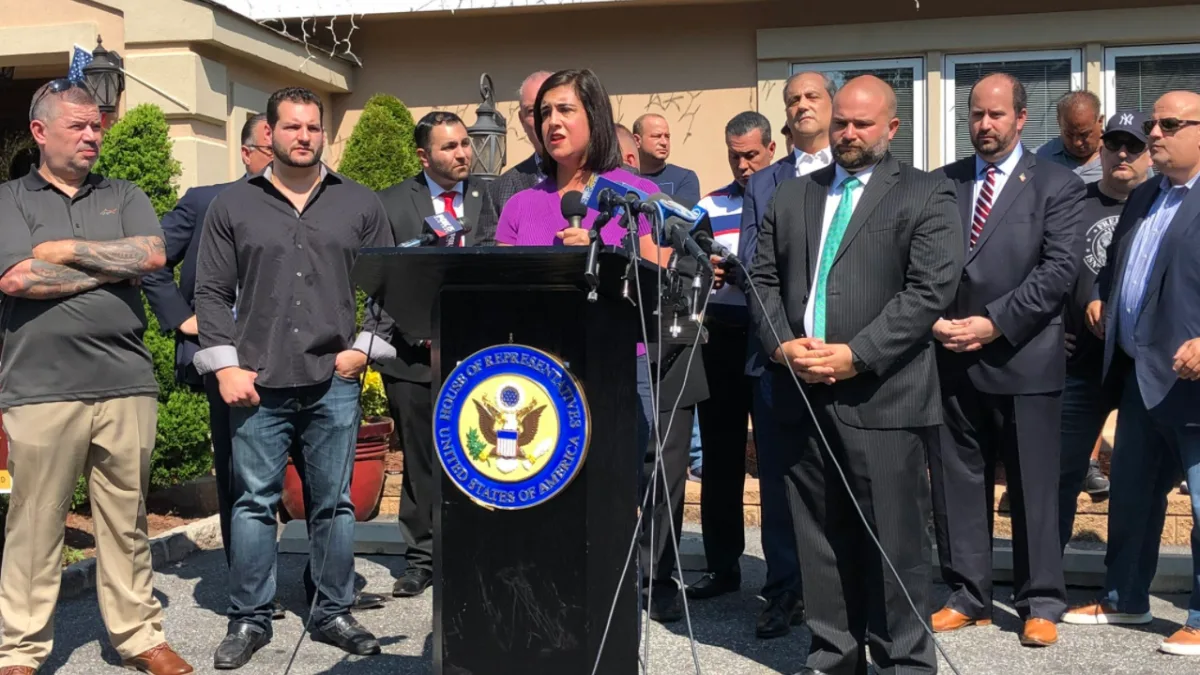
Food stamps and the 2025 shutdown became linked in public debate when a government shutdown dragged into late October 2025 and the Agriculture Secretary appeared at a news conference on SNAP food aid benefits during it, per The Christian Science Monitor. But the shutdown itself was not the main force changing the program. The larger shift came from a 2025 tax and spending law, signed on July 4, 2025, that is rewriting who qualifies, who pays and how many people receive benefits.
The record so far: national SNAP enrollment fell 13% between July 2025 and June 2026, with every state except Alaska seeing some decline, according to reporting by The Christian Science Monitor. The unemployment rate stayed steady over that period, which implies the drop was not driven by more people finding work. An analysis by the Food Research & Action Center, an anti-hunger advocacy group, put the number of Americans who lost benefits since the law was enacted at about 5.2 million, per CBS News.
This article separates what the sourced record establishes about the shutdown moment and the 2025 law from what remains unsettled. SNAP is the formal name for the program most readers know as food stamps: a federal program that sends monthly payments to low-income households to buy food. For more on how federal spending fights like this one get made, see The Budget Reconciliation Process, Explained.
What did the 2025 shutdown actually do to SNAP benefits?
The retrieved record says little about benefit mechanics during the shutdown itself, and honesty requires saying so. What it does establish is that SNAP was prominent enough during the shutdown that House Speaker Mike Johnson and Agriculture Secretary Brooke Rollins held a news conference about food aid benefits in Washington on Oct. 31, 2025, while the shutdown was ongoing, per The Christian Science Monitor. The same report notes that for people who use SNAP, nothing changed automatically at the later Sept. 30, 2026 deadline tied to the 2025 law.
The analysis: the shutdown was the news moment, but the durable changes trace to the statute, not the funding lapse. That reading would change if new evidence showed the shutdown altered distributions in ways the current record does not capture.
Which 2025 law changes are hitting recipients now?
Three changes carry most of the weight. Under the One Big Beautiful Bill Act, recipients aged 18 to 64 must work or volunteer at least 80 hours per month to keep benefits, per CBS News. The work requirement previously aged out at 52; the new law extended it to 64. Lori Covelli, a 53-year-old unemployed social worker in Kenosha, Wisconsin, told CBS News she lost all her benefits after failing to find a job and learned the age limit had moved before she reached it.
Second, starting Oct. 1, 2026, states must pay 75% of SNAP's administrative costs, up from 50%, while the federal share falls to 25%. Those are the costs of running the program, not the food benefits themselves. Third, starting in October 2027, states with high payment error rates will have to pay up to 15% of benefit costs, a cost the federal government previously covered entirely.
Not everything in the record points one way. In fiscal 2025, SNAP made $10.1 billion in improper payments, more than one of every ten dollars spent on the program, per The Christian Science Monitor. Kevin Corinth, a senior fellow at the American Enterprise Institute, argued states now have "a real financial incentive to get things right." Anti-hunger advocates counter that error rates often reflect routine mistakes like misspellings or missing addresses, not fraud. Both readings exist in the record; the outcome is unsettled.
Why is enrollment falling so fast in some states?
Arizona shows the sharpest case. Enrollment there dropped by about 52% to 53% over the last year, the steepest of any state, per CBS News. The state's Department of Economic Security said it had been forced to rapidly overhaul its process to avoid what it called disastrous financial penalties, and that the law produced the most sweeping structural changes and strict administrative penalties seen in a generation. After the overhaul, the state added 57,000 more enrollees in August compared with April.
Arizona's payment error rate was 10.8% in 2025, and the state set a goal of 6% by 2026, per The Christian Science Monitor. Ashley St. Thomas of the Arizona Food Bank Network said part of the decline came from people unable to get through to the state agency because of the extra verification now required. Food banks across the state have reported a surge in first-time visitors.
Nationwide, a July 2026 report by the American Public Human Services Association found 15 states said they were reducing focus on benefit timeliness, 11 said they would consider narrowing eligibility, and four said they might consider pausing or withdrawing from SNAP altogether. Conservative scholars have argued that last option is a political bluff, since states are unlikely to give up billions in federal assistance.
What this means for benefit amounts and state budgets
Benefit levels did move up. On Oct. 1, the annual inflation adjustment raised the maximum monthly benefit for a single-person household in the 48 contiguous states and Washington, D.C. to $306 from $298, and for a family of four to $1,023 from $994, per WGAL. Actual benefits vary by income, household size and expenses, and maximums are higher in Alaska, Hawaii, Guam and the U.S. Virgin Islands.
More than 37 million people received SNAP benefits in March, according to preliminary USDA figures cited by WGAL, down nearly 5 million people, over 11%, from a year earlier. Enrollment now stands at its lowest level since 2019, per CBS News. State budget exposure can be large: Alabama's SNAP director told the Alabama Reflector in July that the error-rate issue could put the state on the hook for $174 million in additional costs, and named ending the program as one option if the state cannot lower its error rate.
Our analysis: the mechanism to watch is administrative, not political. When states face penalty exposure, the record shows they add documentation requirements, cut caseworker support or deprioritize timely processing. Those choices, not the benefit formula, are where most recipients feel the change. For the broader fiscal context behind fights like this, see What the Congressional Budget Office Actually Does.
What remains unknown about SNAP after the 2025 law
The evidence establishes direction but not endpoints. It is not possible to say from the record whether individual cases, like the Arizona single mother who lost both SNAP and state health benefits for a year, resulted directly from the new state requirements. Experts cited by CBS News predict more people will drop out in coming months as further changes take effect, but that is a forecast by named advocates, not an established outcome. Whether any state actually withdraws from SNAP, and how the 2027 error-rate cost sharing lands across the 35-plus states that missed the acceptable error rate in fiscal 2025, are open questions the record does not yet answer.
What the record does support: the 2025 law, not the 2025 shutdown, is the instrument reshaping food stamps, and its effects are arriving on a multi-year schedule that runs through at least October 2027.