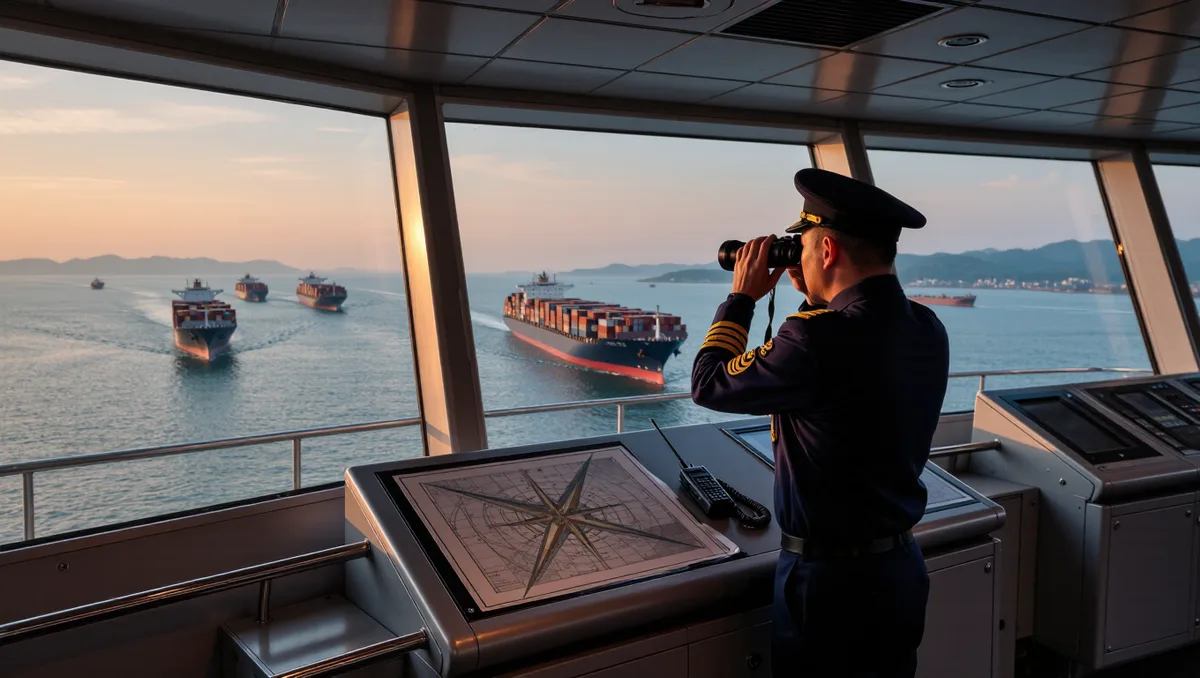
Some of the world's most important economic decisions are made by geography, not governments. A strait is a narrow passage of water between two land masses. When most ships moving between two regions must pass through one, that passage becomes a chokepoint in global trade — a spot where a small disruption can ripple through supply chains everywhere.
The promise behind global trade is simple: goods should move predictably and at a known cost. Chokepoints test that promise. A canal closes, a strait becomes tense, or a local accident blocks a lane, and the price of moving goods changes long before any cargo is lost. This guide explains where the major chokepoints sit, why they carry so much leverage, and what happens when they are squeezed.
For readers tracking how economic statecraft works, chokepoints sit alongside tariffs and sanctions as instruments of leverage. Unlike those tools, though, a chokepoint does not need a policy behind it. The map does the work. You can see the same logic in How Economic Sanctions Actually Work, where controlling access to a market or a payment system creates pressure without firing a shot.
What exactly is a maritime chokepoint?
A maritime chokepoint is a narrow waterway that a large share of shipping cannot avoid. The defining feature is not traffic volume alone. It is the lack of alternatives. If a canal closes and no comparable route exists, ships face long detours, higher fuel costs, and delayed deliveries. Insurers price that risk, and the cost lands in freight rates and, eventually, on shelves.
Chokepoints come in two broad types. Canals are built passages, managed by a single authority, with schedules, fees, and capacity limits. Straits are natural passages, often bordered by two or more countries, and governed by a mix of international maritime law and the politics of the states next door. Canals can be widened; straits mostly cannot. That difference shapes how each type fails.
Which waterways matter most to global trade?
Several passages carry a disproportionate share of world commerce, and each has its own character:
- The Strait of Hormuz. The passage between the Persian Gulf and the open ocean. It is the exit route for a large share of the world's oil and liquefied natural gas. Because the energy cargoes are so concentrated there, tensions in the Gulf move oil prices quickly, even when no ship is touched.
- The Strait of Malacca. The main link between the Indian and Pacific Oceans, running past Singapore, Malaysia, and Indonesia. It carries the bulk of the sea trade between East Asia and the Middle East, Europe, and Africa. Its main vulnerability is simple: it is long, busy, and has no true substitute for very large vessels.
- The Suez Canal. A man-made canal connecting the Mediterranean and the Red Sea. It lets ships travel between Asia and Europe without rounding Africa. A closure here forces the long detour around the Cape of Good Hope, adding weeks and fuel to the voyage.
- The Panama Canal. The shortcut between the Atlantic and Pacific for the Americas. Its constraint is not politics but water: the canal depends on freshwater from its watershed, and drought years have forced restrictions on how many ships and how much cargo can transit.
- The Danish straits, the Bosphorus, and Bab el-Mandeb. Smaller by volume in some cases, but each carries specific cargoes — grain, energy, or container traffic — where alternatives are thin.
The common thread is concentration. When a large fraction of a commodity flows through one passage, that passage becomes a single point of failure for the whole system.
How does a chokepoint disruption reach consumers?
The transmission works through three channels. The first is routing. Ships that must detour burn more fuel and spend more days at sea, which raises the cost per voyage. The second is capacity. When one route is blocked, traffic crowds onto alternatives, and those alternatives have limited berths, pilots, and tugs. Port congestion follows. The third is insurance. War-risk premiums rise when a passage is considered dangerous, and those premiums are charged per voyage.
Each channel adds cost before a single container is lost. Retailers and manufacturers then face a choice: absorb the cost, delay orders, or pass prices on. That is how a dispute a reader will never see, in a strait they will never cross, shows up as a slower delivery or a higher price tag. The same pass-through logic applies to trade taxes, as explained in How Tariff Schedules Decide What You Pay.
Who holds the leverage at a chokepoint?
Leverage depends on who controls the passage and who depends on it. Canal authorities hold commercial leverage: they set fees and transit slots, and users pay because the alternative is worse. Coastal states hold legal and political leverage: under international maritime law, ships generally enjoy transit passage through straits used for international navigation, but the practical environment — patrols, inspections, local tensions — is shaped by the governments on shore. Great powers hold naval leverage: keeping sea lanes open has been a stated mission of major navies for decades, and escort operations during regional conflicts are the visible version of it.
The analysis: chokepoints give their gatekeepers a bargaining position that is strongest when it is never used. A threat to close a passage can move prices and insurance costs without any actual interference, which is why states that depend on these routes invest in alternatives — new pipelines, longer rail corridors, or simply different suppliers. Whether those alternatives are economically sensible is a separate question; most are more expensive than the waterway they are meant to replace. What would change this reading is evidence that alternatives have become genuinely competitive at scale, which the record so far does not show.
What can governments and companies actually do?
No government can widen a strait. The practical responses are about resilience rather than control:
- Diversify routes and suppliers. Firms that depend on one passage for critical inputs carry more risk than those with options. The broader shift in sourcing patterns is covered in How Friendshoring Is Rewriting Global Supply Chains.
- Build buffers. Strategic stockpiles exist precisely for goods whose supply routes are fragile. Energy is the classic case, and the mechanics are explained in How the Strategic Petroleum Reserve Gets Tapped.
- Invest in monitoring. Shippers, insurers, and navies track chokepoint conditions in near real time, because early warning is cheaper than reaction.
- Price the risk honestly. Insurance and freight contracts that reflect chokepoint risk let buyers compare true costs instead of discovering them during a crisis.
For small businesses, the takeaway is narrower but real: longer, more fragile routes show up as longer lead times. Ordering earlier and keeping modest buffers of critical inputs is the everyday version of national-level resilience.
What chokepoints tell us about the world economy
Chokepoints are a reminder that efficiency and fragility are two sides of the same design. Global shipping is optimized to move goods through the cheapest routes, and the cheapest routes run through narrow water. That optimization keeps prices low in normal times and concentrates risk in abnormal ones. The evidence from past disruptions is consistent: costs rise quickly when a passage closes, and they fall slowly as traffic normalizes. What remains unknown, for any given chokepoint, is how much redundancy the system will build before the next squeeze — because redundancy costs money, and the incentive to pay for it fades as soon as the waterway reopens.