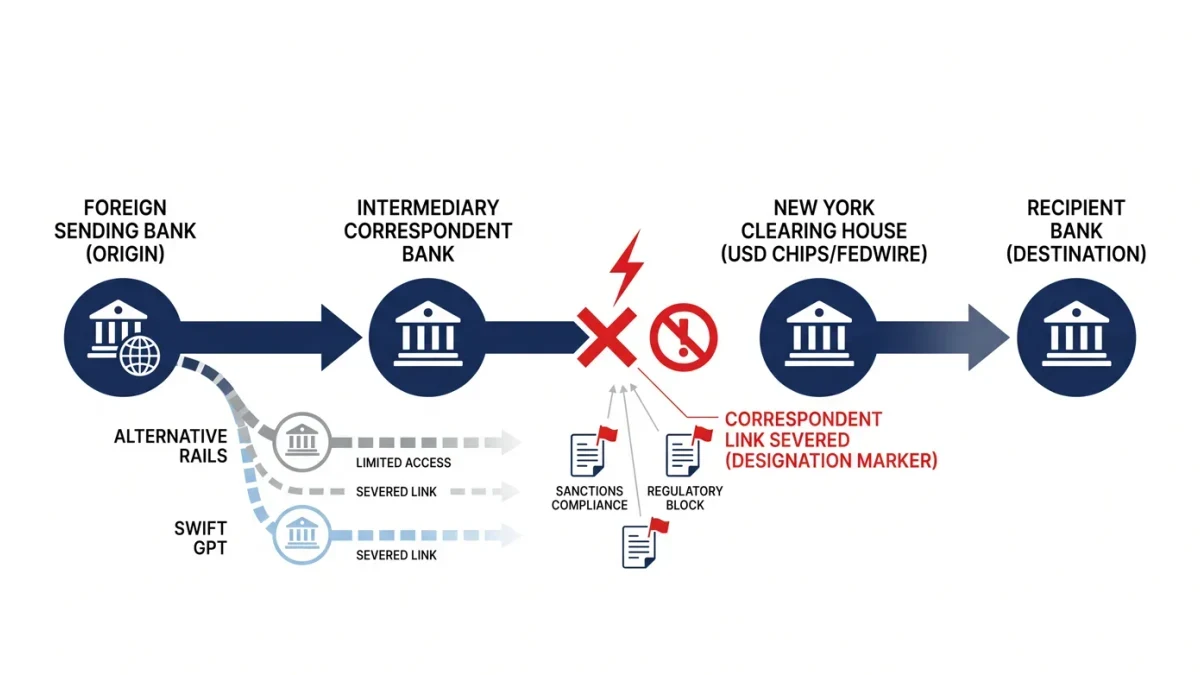
Secondary sanctions are U.S. measures against parties — usually banks — for conduct that has no U.S. nexus: a Turkish bank clearing dollars for a sanctioned Iranian company commits no act on U.S. soil, yet can lose access to the dollar system for it. The legal base is presidential emergency power — the International Emergency Economic Powers Act of 1977 — plus statute-specific secondary authorities in the Iran, Russia, Hezbollah, and North Korea sanctions laws. The mechanism is not a lawsuit: the Treasury's Office of Foreign Assets Control designates the bank, cutting it off from U.S. correspondent banking, and any U.S. institution dealing with it becomes itself exposed. The demonstration case remains BNP Paribas, which in 2014-2015 paid 8.9 billion dollars in penalties and a guilty plea for processing dollar transactions for sanctioned parties — the fine that taught every compliance department on earth.
Why does dollar clearing give this reach?
Because dollars clear through the United States. Even a transfer from Dubai to Shanghai in dollars passes through a U.S. correspondent account — the chain runs through New York — and at that moment U.S. jurisdiction attaches, as the courts have uniformly held since the 2010s' cases. Roughly 88 percent of foreign-exchange transactions involve the dollar on one side, per the BIS triennial survey, and the alternative rails — euro, yuan — lack depth and legal finality for global trade. So the choice OFAC offers foreign banks is stark: keep the sanctioned customer or keep the dollar business. The record shows nearly all choose the dollar, which is why Russian banks cut off in 2022 found dollars unusable even where not strictly barred.
How are the Russia sanctions using it?
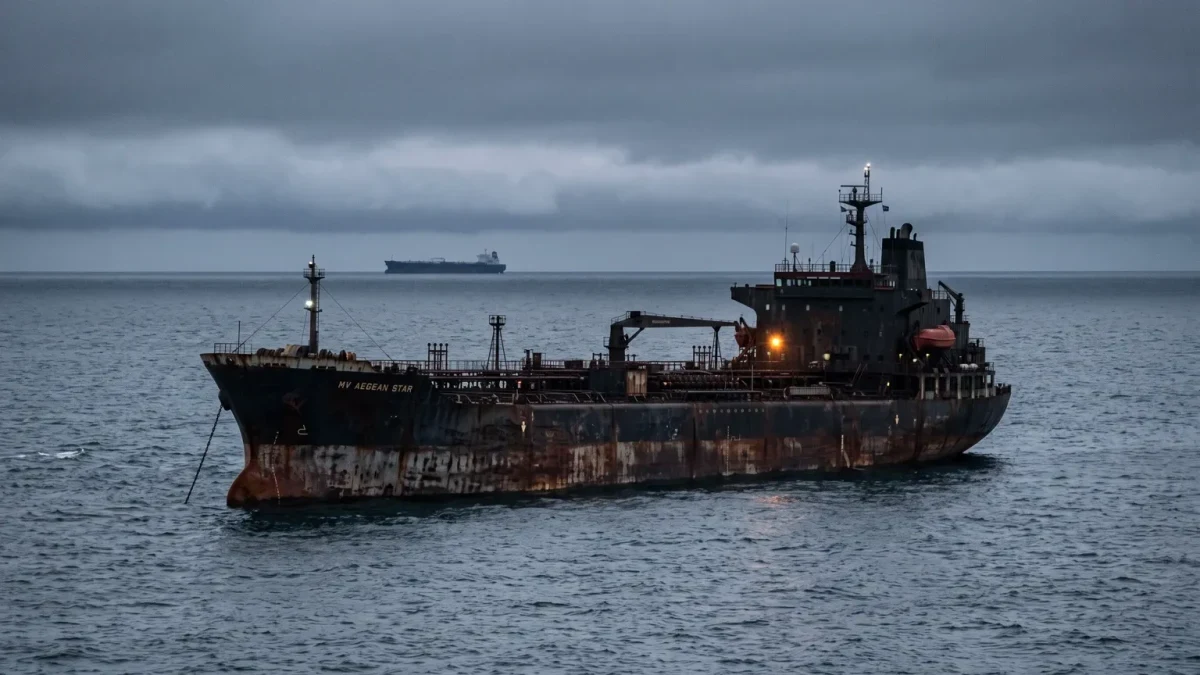
As the central instrument of coalition enforcement. The 2024-2025 waves targeted third-country facilitators: sanctions on banks in Turkey, the UAE, and Central Asia processing Russian payments; the December 2023 executive order authorizing secondary sanctions on foreign financial institutions for transactions with Russia's war economy; and the price-cap coalition's enforcement actions against shipowners and traders. The OFAC advisories to industry spell out the red flags — payment-route changes, new intermediaries without history, transshipment patterns — and the designated list grows quarterly. The evader side responds in kind: Russian payment rails in yuan and dirhams, barter structures, and the shadow fleet moving oil outside the cap — the arms race the enforcement data describe, with OFAC actions against hundreds of entities and tankers through 2025.
What are the compliance mechanics on the receiving end?
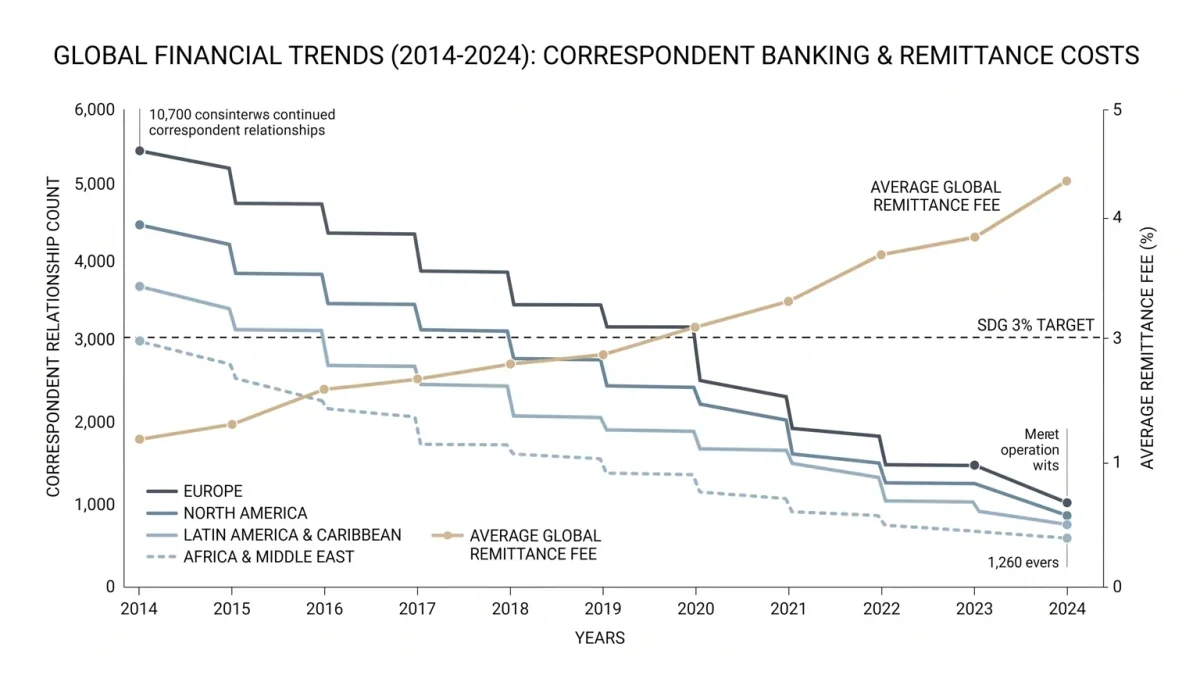
Every international bank runs sanctions screening: name-matching against OFAC's SDN list and sectoral lists at payment initiation and clearing, with fuzzy matching, re-screening on list updates, and blocking or rejecting hits. False-positive rates are enormous — common surnames match sanctioned parties constantly — so compliance departments are large cost centers; industry estimates put global financial-crime compliance spending above 200 billion dollars a year, sanctions the largest slice. The penalty scale enforces seriousness: post-BNP resolutions included Standard Chartered, HSBC-era conduct, and 2023-2025 actions against smaller correspondents, plus the DOJ's Russia-related resolutions with European banks in 2024-2025 for sanctions-evasion processing. De-risking is the systemic byproduct: banks exiting whole regions — Somalia's remittances the classic casualty — rather than pricing the risk.
Does it work?
For cutting sanctioned states off from dollar finance, yes: Iran's oil customers, Russia's major banks, and North Korea's counterparties all lost dollar access, and the compliance wall persists between announcements. For changing behavior, the ledger is mixed: Russia's economy adapted at a price — paying premium commissions through intermediaries, building yuan-based rails, running a war economy on non-dollar flows; Iran kept exporting oil through grey channels at discounts; and the weapon's overuse has visible corrosion effects — reserve diversification into gold, the BRICS pay discussions, China's CIPS yuan system growing from a small base, all documented in central banks' reserve surveys showing the dollar's share of reserves near three-decade lows around 58 percent, down from about 71 percent in 2000. The analysis: secondary sanctions are the purest expression of financial-network power — extraterritorial by architecture rather than treaty, enforced by private compliance rather than prosecution — and their durability rests on the dollar clearing monopoly, which the same overuse erodes at the margin; each round of sanctions finances a bit of the alternative infrastructure it will eventually compete with. What would change the reading is a clearing alternative reaching commodity-scale settlement — a threshold the current workarounds have not crossed.
Frequently asked questions
What are secondary sanctions?
U.S. sanctions on foreign parties — typically banks — for dealings with sanctioned states or people, with no U.S. nexus required. Enforcement runs through Treasury designation that cuts access to dollar correspondent banking, forcing a choice between the customer and the dollar system.
Why can U.S. sanctions reach foreign banks?
Dollar transactions clear through U.S. correspondent accounts, attaching U.S. jurisdiction — the holding every court has sustained since BNP Paribas paid 8.9 billion dollars in 2014-15. With dollars on one side of most global forex, the reach is systemic.
What is correspondent banking's role?
It is the chokepoint: foreign banks hold dollar accounts at U.S. banks, and OFAC designation severs that access. Losing it makes a bank unusable for dollar trade — which is why institutions worldwide over-comply and de-risk whole regions.
Are secondary sanctions legal under international law?
Widely contested — the EU hasBlocking Statutes against them and allies object to extraterritoriality — but functionally unchallengeable: no forum binds the United States here, and the system is enforced by private compliance, not courts. Effectiveness, not legality, is the live debate.