The World Trade Organization's dispute settlement system was built as two instances: panels — first-instance tribunals of three trade experts — and the Appellate Body, a standing seven-member court whose rulings were automatically adopted and binding. Since December 2019 the Appellate Body has been paralyzed: the United States, under both administrations, blocked all appointments, citing judicial overreach — rulings that added obligations members never negotiated, precedent treated as binding, rule 15 tenure overruns — and the court lost its quorum and stopped hearing appeals. The first instance still functions: more than 60 panel reports have issued since 2019, and members still bring cases — trade litigation continues at roughly half its pre-paralysis pace, with the 2024-2025 docket including major disputes over tariffs, China's trade practices, and food measures.
What happens when a losing party appeals now?
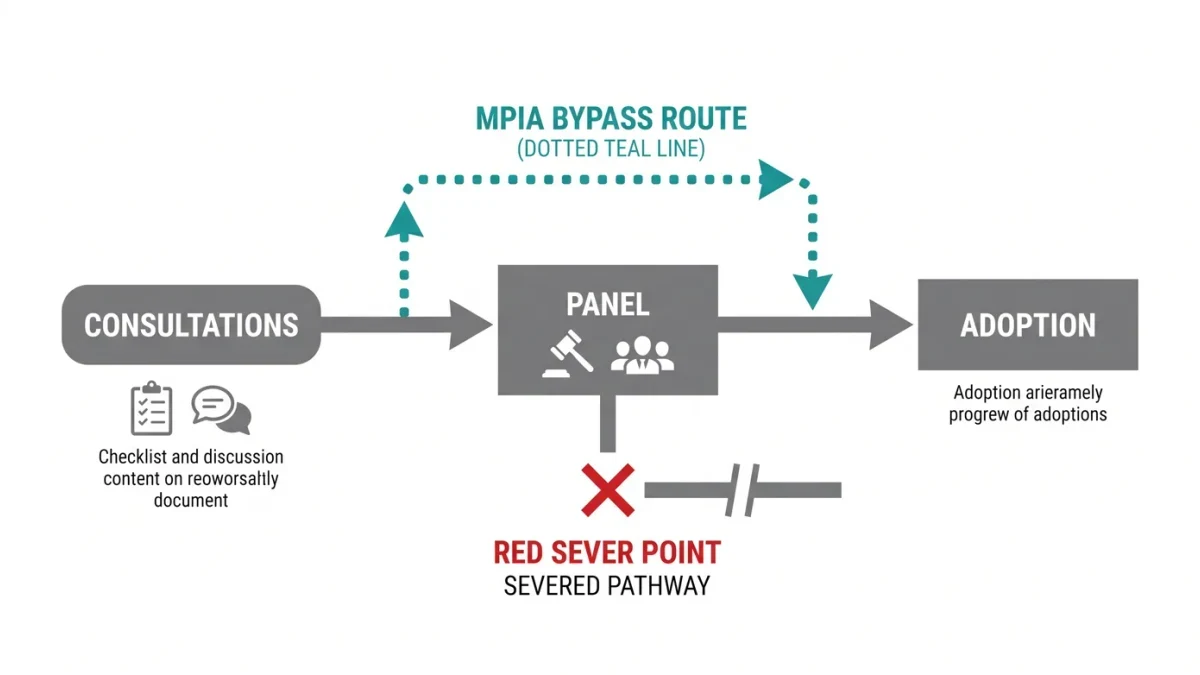
It appeals into the void. An appeal to a body without members — the appeal into the abyss — legally blocks the panel report's adoption forever, so a losing party can simply appeal and pocket the delay. This is the system's central wound: every ruling is now enforceable only against parties who choose not to appeal, or under the workarounds. The practical pattern splits: many respondents — the EU, Japan, Canada, Brazil, Australia, most of the membership — do not appeal into the void, accepting panel reports as final; the strategic appeals concentrate in the most contested cases, the U.S.-China and tariff-era disputes, precisely where enforcement matters most.
What are the workarounds?
Three. The Multi-Party Interim Appeal Arbitration Arrangement — MPIA — an interim appeals mechanism built by the EU, China, Canada, and about two dozen others in 2020 using Article 25 arbitration of the dispute settlement understanding: appeals between MPIA members go to arbitral panels that issue binding awards within 90 days. It has issued decisions — the 2022-2024 cases between MPIA members — and works, but only among parties to it; the United States, India, and others are outside. Second, no-appeal agreements: disputing parties agree in advance to accept the panel report as final. Third, arbitration provisions and unilateral responses — section 301-style retaliation — which is where the strongest powers actually operate now, the system the 1990s architecture was designed to replace.
What is the reform negotiation?
Stuck by design mismatch. The 2022-2024 reform talks — mandated by the 12th and 13th ministerial conferences — produced an agreed diagnosis: restore binding two-tier settlement with independence, timeliness, and no advisory opinions, added obligations, or precedent creep. The divide is the U.S. demand for a fundamentally reined-in court versus the majority's preference to restore the old body with procedural fixes, and the draft texts through 2025 bridged everything except the questions the United States raised: precedent, standard of review, the scope of review of panel legal findings. The 2024 U.S. election did not change the position — both parties' trade teams shared the original critique — and the 2026 ministerial carries the issue forward without a text in sight.
Does the paralysis matter?
Yes, unevenly. For the tariff-era disputes — the 2018-2025 steel, aluminum, and broad tariff measures — panels ruled against the United States in the steel cases, appeals into the void followed, and the binding remedy never attached: the great-power trade war ran outside enforcement, which the drafters of 1995 would recognize as failure. For routine disputes — food standards, anti-dumping methodology, licensing — panels still issue reasoned rulings that carry compliance weight, because reputational enforcement among middle powers still functions. The caseload pattern proves the split: members with leverage appeal or ignore; members without leverage comply. The analysis: the appellate paralysis converted the WTO's legal system from a court into an advisory service for the strong and a working court for the rest — the interim MPIA preserving the two-tier discipline among volunteers — and the underlying U.S. critique, that unaccountable adjudication drifted beyond the negotiated bargain, is now shared in part by other members even as they reject the blockade as remedy. What would change the reading is a restored court with limited-appeal terms, the compromise every draft circles, which requires a U.S. administration deciding that binding discipline serves it again — the bet the reform talks keep placing and missing.
Frequently asked questions
Why is the WTO Appellate Body not functioning?
The United States has blocked all appointments since 2017, and by December 2019 the body fell below the three members needed to hear appeals. U.S. objections — judicial overreach, binding precedent, added obligations — have continued under both parties, leaving the court paralyzed since.
What is the MPIA?
The Multi-Party Interim Appeal Arbitration Arrangement: about two dozen members, led by the EU and including China and Canada, route appeals to binding arbitration under Article 25 of the dispute settlement understanding, with 90-day deadlines. It works — but only among its parties.
Can a country block a WTO ruling now?
Yes, by appealing into the void: an appeal to the paralyzed body blocks the panel report's adoption indefinitely. Strong powers use this in the most contested cases; most members still accept panel reports as final.
Is the WTO dispute system still useful?
For routine disputes, yes — panels still issue reasoned rulings most members comply with. For the biggest conflicts — the tariff wars — rulings are appealed into the void or ignored, so great-power trade disputes now run on power and negotiation rather than law.