International election observation is the systematic assessment of an electoral process against a country's own law and international commitments, conducted by invited teams of experts and monitors. The gold standard is the Organization for Security and Co-operation in Europe's Office for Democratic Institutions and Human Rights, or ODIHR, which has observed more than 400 elections since 1990 and deployed, for example, a full mission of several hundred observers to the United States in November 2024. Its findings are issued as preliminary conclusions within days and final reports within weeks, each carrying numbered recommendations the host government can adopt or ignore. This explainer covers what observers actually do, and what they cannot.
What does a mission actually measure?
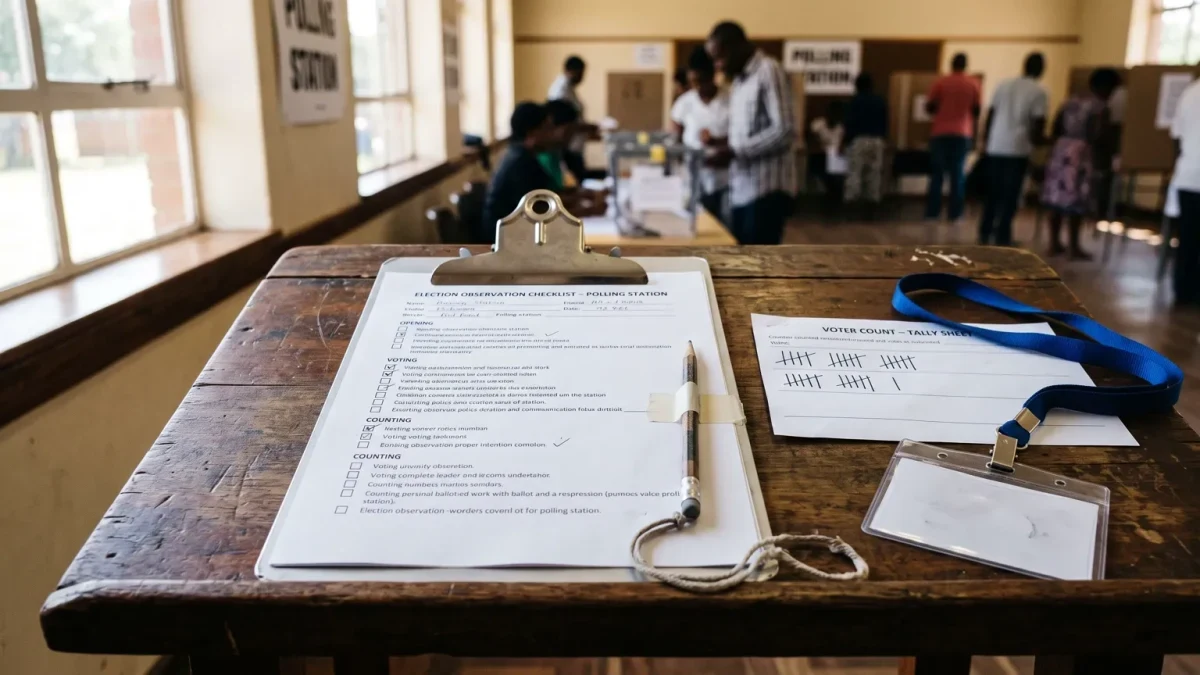
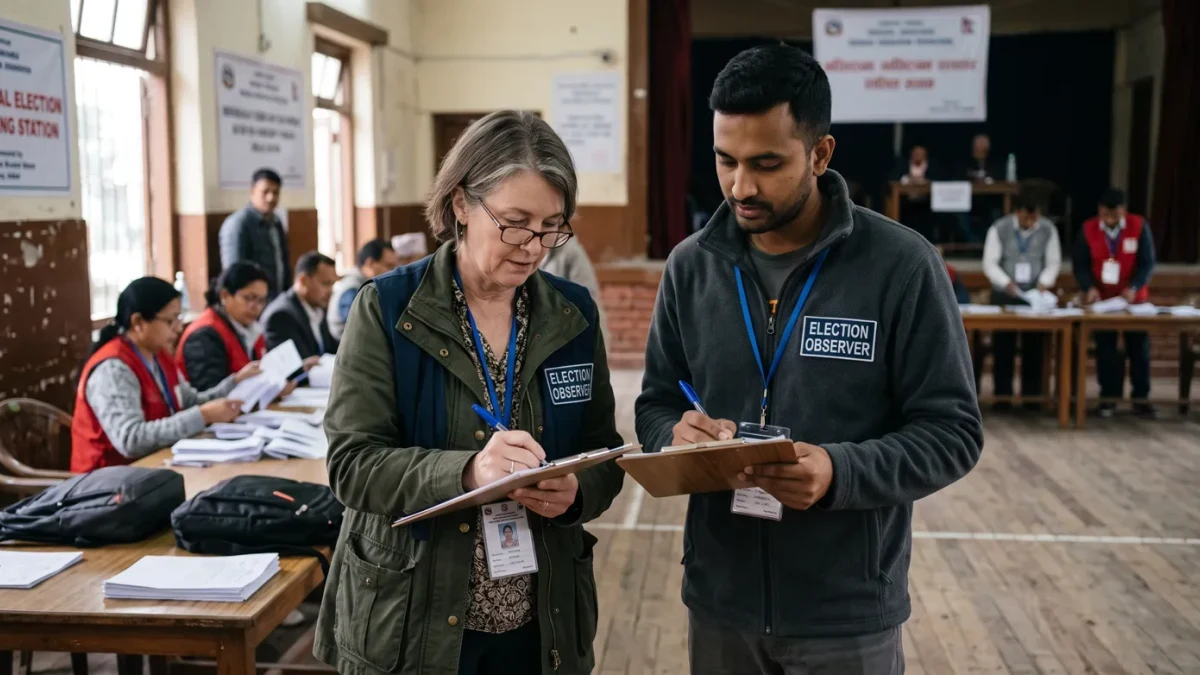
A long-term methodology built on the 2005 Declaration of Principles for International Election Observation, endorsed by more than 50 organizations. Long-term observers arrive weeks early and assess the legal framework, media coverage, campaign finance, voter registration, and dispute resolution; short-term observers deploy on election day to a statistically drawn sample of polling stations, where they complete standardized observation forms — opening procedures, the count, tabulation. ODIHR's methodology deliberately samples rather than visits everywhere, and its statements of preliminary findings grade every element — campaign environment, media, counting — with supporting detail, the numbers coming from the observer forms rather than impressions.
What authority do the reports carry?
None in law — and deliberate weight in politics. OSCE commitments, the 1990 Copenhagen Document's election promises, are politically binding on all 57 participating states, including the United States, and every one of them, including the U.S., accepts observation. The reports' leverage is repetition: ODIHR has issued U.S. reports every cycle since 2002 with recurring recommendations — uniform standards for the 50-state decentralized system, voter-identification consistency, dispute deadlines — and the 2024 report repeated the 2020 finding that the November 5 election was competitive and professionally administered while noting the recurring recommendations again. Host governments that dislike findings usually dispute the mandate rather than the data.
Who are the fake observers?
The mission look-alikes: invited guest delegations — parliamentarians' friendship visits, think-tank fly-ins — that hold a press conference endorsing the result with no methodology, no forms, no long-term baseline. The practice is common in contested jurisdictions, and the observer community's answer is transparency about who follows the Declaration of Principles: OSCE, the European Union's missions, the Carter Center, and the regional networks publish their methodology, observer counts, and statistical bases precisely so their product is distinguishable from an endorsement. The 2005 Declaration's language is pointed: observation must not be confused with the ad hoc visits that predate a verdict.
What happened to observation in the hard cases?
It shrank where it is needed most. Russia expelled the OSCE's full presence after 2022, ending what had been the largest observed elections of the 1990s-2010s in scope; Belarus's 2020 observation ended with the mission's findings of systematic falsification and the aftermath that followed; Central Asian hosts limit mission size and terms. The counter-pattern is restrictions everywhere: ODIHR's 2024 annual report noted continued declines in the space for observation, including observer accreditation refusals. In the United States, some states restrict international observers' access to polling places — a legal gray zone the 2024 mission worked around — while others welcome them.
Does observation change anything?
Slowly and unevenly, which is by design. Final reports carry recommendations addressed to authorities; the OSCE's follow-up system tracks implementation, and its own reviews find partial uptake highest where governments want the international seal — the Baltic states and the Balkans' EU-candidates built whole electoral reforms around ODIHR texts. Where the will is absent, recommendations accumulate unimplemented, and the reports' function shifts to documenting the gap. The analysis: observation is an epistemic instrument — it converts a contested local event into a documented record against public commitments, valuable exactly when domestic institutions are distrusted — and its recent constraints show governments understand that function well. What would change the reading is observation losing access in consolidated democracies, a trend the 2024 U.S. cycle's state-level restrictions began to sketch.
Frequently asked questions
Who monitors U.S. elections internationally?
The OSCE's ODIHR, under a commitment all 57 participating states including the United States have accepted since 1990. Its 2024 mission observed the November 5 election and found it competitive and professionally administered while repeating standing recommendations on uniform standards.
Can election observers interfere in voting?
No. Observers watch and record; they may not touch ballots, instruct voters, or disrupt procedure. Their access rules are set by the host's law, and their product is the report, not the intervention.
What is the 2005 Declaration of Principles?
The common methodology endorsed by more than 50 observing organizations: long-term and short-term deployment, standardized forms, statistically based findings, and non-interference. It distinguishes genuine observation from endorsement delegations.
Do observer reports have legal force?
No. They are political documents issued under politically binding OSCE commitments. Their power is documentation and follow-up tracking, strongest where governments seek international legitimacy.