A trade agreement is a contract between governments, and like any contract it needs a way to handle breach. The surprise is how rarely enforcement looks like a courtroom. Countries mostly compel compliance through consultations, panel rulings and the right to withdraw concessions — that is, to impose offsetting barriers until the violator complies or negotiates.
Trade agreement enforcement is the set of procedures by which one government pushes another to honor commitments it has made, typically through three routes: dispute settlement under a shared institution, retaliation authorized by a ruling, and unilateral remedies written directly into bilateral deals. None of these routes sends marshals to a port. All of them work by changing the cost-benefit math for the offending government, which is why the country being pressured usually has some leverage of its own.
The mechanism matters more than the press release that announces a deal. A tariff schedule without an enforcement pathway is a promise; the enforcement pathway is what turns it into a commitment. Readers watching any new agreement should ask the same question this publication asks of every policy instrument: who can trigger the machinery, and what happens when they do.
Why can't a trade agreement simply be 'enforced' like a law?
Because there is no world police for trade. Trade commitments are made between sovereign states, and no international body can compel a government to change its law. What exists instead is consent-based enforcement: a country agrees in advance that, if a panel finds against it, it will either comply or accept retaliation against its own exports. Trade, in the basic sense of exchanging goods and services of value, predates any such machinery by millennia — the enforcement layer is a modern graft onto a very old practice, and it only works while both sides prefer the deal to the alternative.
This is the structural weakness. A large economy that can absorb retaliation has less to fear from the process than a small one. The rules are formally symmetrical; the bargaining power behind them rarely is.
How does dispute settlement work under the WTO?
The World Trade Organization runs the most developed system. A member that believes another has breached a commitment first requests consultations. If talks fail, the dispute goes to a panel, which issues findings that can be appealed. If the violation stands, the respondent is expected to bring its measure into line. If it does not, the complainant may ask authorization to suspend concessions — the formal name for retaliatory tariffs of roughly equivalent effect.
The system's appeal stage has been hobbled in recent years, because new appointments to its appellate body have been blocked and the body ceased to be able to hear appeals. Some members have improvised, using multi-party arbitration arrangements among themselves to keep appeals possible. The result is a system that still issues panel findings but no longer offers every member the same finality it once did.
For a sense of what the institution's own numbers do and do not say about the trading system, see our earlier piece on The WTO Cut Its 2025 Trade Forecast. The Numbers Matter More Than the Headline. This connects to our earlier piece, The WTO Cut Its 2025 Trade Forecast. The Numbers Matter More Than the Headline.
What remedies do bilateral and regional agreements build in?
Modern preferential agreements copy the WTO template — consultations, then a panel — but add their own teeth. The most important addition is the state-to-state retaliation right: if a panel finds a breach and the respondent does not comply, the complainant may suspend equivalent benefits without asking anyone's permission. Some agreements also allow cross-retaliation, meaning a country hurt in services can retaliate against goods, which matters when the offending sector is one the complainant does not trade in.
A second layer is faster and more political. Many agreements create standing committees that meet regularly, letting governments apply pressure long before a formal dispute. Some include expedited procedures for specific sectors. Recent North American agreements, for example, include dedicated panels for labor and environment claims that can lead to suspended tariff benefits — a design choice that moves enforcement closer to the domestic politics of the complaining country.
Finally, agreements discipline the unilateral option. Safeguard clauses, anti-dumping rules and countervailing-duty rules define when a country may raise barriers on its own authority. These are the workhorses of day-to-day enforcement, and most trade friction runs through them rather than through formal dispute settlement.
Who actually wins when a country retaliates?
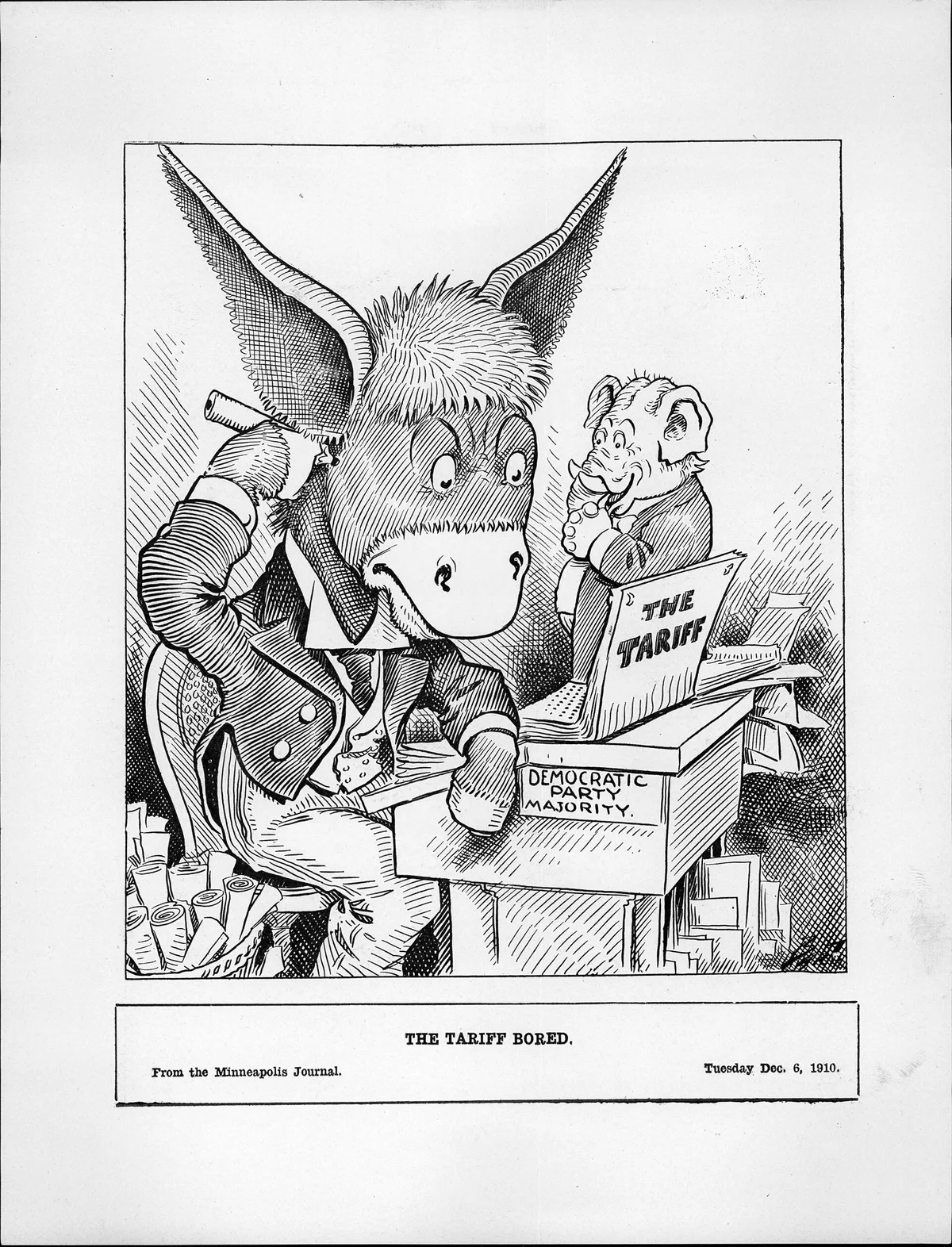
Retaliation is a blunt instrument, and its costs are worth stating plainly. Authorized tariffs are imposed on the complainant's own importers and consumers, not on the foreign government. Domestic industries that use the targeted imports pay more. The retaliating country spends its leverage to make a point, and once spent, the point is made.
The analysis: this is why most disputes settle. The threat of retaliation is usually worth more than its use, because a government facing the prospect of losing export access often prefers to adjust the offending measure quietly. Compliance rates under dispute settlement have historically been respectable by international-standards measures — not because panels are feared, but because the alternative, a trade war with a partner you cannot replace, is worse. The reading would change if major economies concluded that retaliation costs them less than compliance, which is the hypothesis to watch in any period of tariff escalation. For related coverage, see How a Central Bank Digital Currency Would Change Payments.
What happens when a large country simply ignores a ruling?
Formally, nothing automatic. The complainant can retaliate within authorized limits, and it can publicize the non-compliance. Practically, the options narrow. Smaller complainants have historically been advised by trade lawyers to 'bundle' their cases — win a ruling, then join coalitions so that retaliation lands on multiple fronts. Larger complainants sometimes skip the institution altogether and act unilaterally, which erodes the system's authority but delivers faster results.
The analysis: enforcement power in trade tracks market power. A country that is a large export market holds a structural advantage in every dispute, because its retaliation hurts more and its own exposure to retaliation hurts less. This is not a flaw in drafting; it is the incentive structure the drafting sits on top of. Any reform that does not change market concentration will not change that arithmetic.
What this means for readers of trade news
When a government announces a trade deal, the enforcement chapter tells you how much of it is real. Look for three things: whether disputes go to binding panels, whether the complainant can retaliate without further permission, and whether specific sectors — labor, environment, digital rules — have their own procedures. Agreements with all three tend to hold; agreements with vague consultation language tend to drift.
It also explains a recurring pattern in the news. When a country 'takes action' under a trade agreement, the action is nearly always a tariff, a suspension of benefits, or the filing of a case — instruments that work through economic pressure rather than legal compulsion. The agreement creates the framework; the leverage does the enforcing. That distinction is the single most useful thing to carry into any headline about a trade fight.