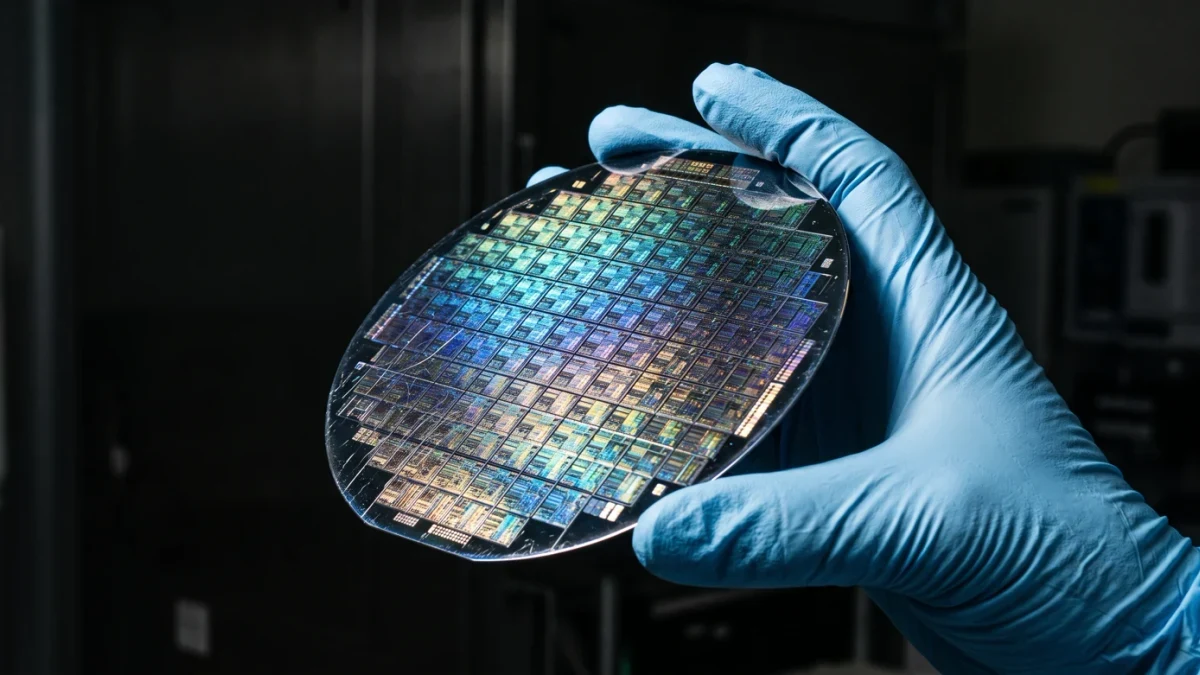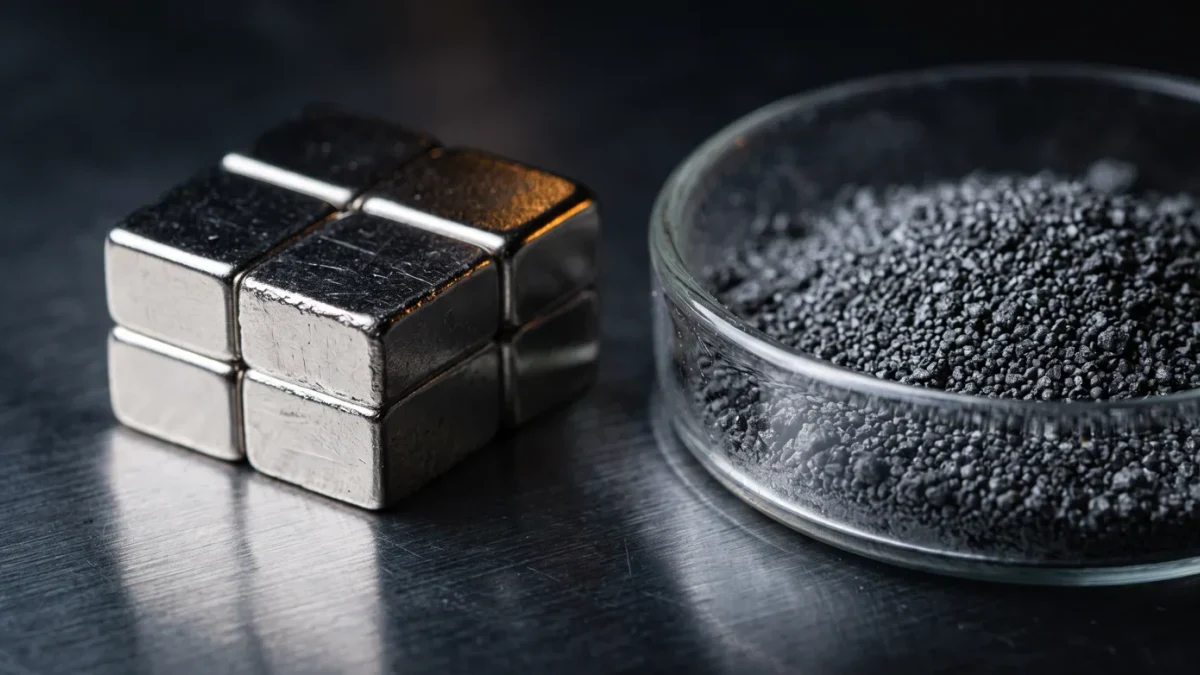
Rare earth elements — the 17 lanthanides plus scandium and yttrium — are the input layer of modern manufacturing: permanent magnets for EV motors, wind turbines, and precision weapons; phosphors; polishing powders; battery alloys. China mines about 60 percent of world ore but refines roughly 90 percent of the world's supply, a processing dominance built deliberately since the 1990s through low costs and quotas. That position became a policy instrument in stages: export quotas in 2010 — struck down by the World Trade Organization in 2014 after a U.S.-led challenge; export controls on gallium and germanium from August 2023; graphite from December 2023; antimony from 2024; and, in 2025, expanding license regimes on a widening list of rare-earth items — including, from October 2025, controls aligned with the U.S.-China trade truce's terms. The leverage is the processing bottleneck, not the ore.
How do the controls work mechanically?
As export licensing, not embargoes: Chinese exporters of listed items must obtain licenses from the Ministry of Commerce, with applications reviewed for end-user risk — dual-use language borrowed from the arms-control tradition. The immediate effect in each round was price and delay: gallium prices roughly doubled after the 2023 controls; antimony tripled through 2024; magnet exporters outside China faced multi-month waits and uncertain case-by-case decisions for heavy rare earths like dysprosium and terbium. The extraterritorial touch arrived in 2025: rules restricting foreign-made goods containing Chinese-origin rare earths and magnets, extending jurisdiction downstream — a mirror of the U.S. foreign direct product rule, applied to elements instead of chips.
Why are the magnets the choke point?
Because downstream substitution is slow everywhere. NdFeB magnets — neodymium-iron-boron with dysprosium additions — are the workhorse, and China makes roughly 90 percent of global magnet capacity, with Japan's Proterial and Shin-Etsu and a small Western sector holding the rest. Building non-Chinese separation and magnet capacity is the plan on every allied drawing board: the U.S. MP Materials' Mountain Pass expansion, backed by Department of Defense agreements including the 2025 Pentagon partnership and Apple supply deals; Australia's Lynas with U.S. government funding for heavy-rare-earth separation in Texas; the EU's critical raw materials act setting 2030 benchmarks — 10 percent domestic extraction, 40 percent processing, 25 percent magnet-making. The timeline gap is the story: mines take years, separation plants longer, and magnet lines with automotive qualification longest — five to ten years against a weapon that operates now.
What did the 2025 episodes show?
The system's first live tests. The April 2025 Chinese controls — in retaliation for U.S. tariffs — applied to seven heavy rare earths and magnets, and auto supply chains seized within weeks: production warnings from European and Asian suppliers, U.S. factories flagging magnet shortages, and the issue escalated to the highest level before the trade talks produced the framework that led to the October 2025 arrangement suspending the newest Chinese controls for a year in exchange for U.S. tariff pauses. The episode is the era's cleanest demonstration: chokepoint weaponization works on a quarter's timescale, and both sides priced it into the truce. The broader list of 2023-2024 controls — gallium, germanium, antimony, graphite — remains in force, licenses pending.
Who absorbs the costs?
Import-dependent manufacturers first — automakers, wind developers, defense primes, with the Department of Defense's stockpiling and the Pentagon's funding of MP marking the U.S. response's defense layer. Chinese producers absorb volume losses: export volumes of gallium and antimony fell sharply after each round, revenue shifting to higher prices, and China's own magnet exporters lobbied against the 2025 controls for losing customers — evidence both sides cite. Third countries position between: Vietnam's and Thailand's processing investments, Malaysia's Lynas plant, the Gulf's smelting ambitions — the rerouting that follows every weaponized chokepoint. The analysis: rare earths are the test case for interdependence as leverage — the refinement bottleneck was built by market forces over three decades and can be unbuilt only by industrial policy over one; the 2025 truce did not dismantle the tool, it demonstrated and priced it, and the diversion of investment that followed — MP, Lynas, the EU act — is the market's verdict that the valve will be used again. What would change the reading is non-Chinese magnet capacity reaching a third of world supply on schedule in the early 2030s, which would convert the weapon into a price shock rather than a stoppage.
Frequently asked questions
Why are rare earths a geopolitical issue?
Because one country — China — refines about 90 percent of world supply and makes about 90 percent of the strongest permanent magnets, inputs to EVs, wind, and weapons. Since 2023 China has used export licensing on that bottleneck as a strategic instrument, most visibly in the 2025 magnet crisis.
Which rare earths did China restrict?
Gallium and germanium from August 2023, graphite from December 2023, antimony from 2024, and seven heavy rare earths plus magnets in April 2025 — later suspended for a year under the October 2025 U.S.-China framework, while the earlier rounds remain under licensing.
Can the U.S. replace Chinese rare earth supply?
Partially and slowly. MP Materials in California, Lynas in Australia and Texas, and allied projects target separation and magnet capacity by the early 2030s under the EU act and Pentagon funding. Mines, separation, and qualified magnet lines each take years — the vulnerability window is now.
Didn't the WTO ban China's rare earth restrictions?
In 2014 the WTO struck down China's export quotas on raw materials including rare earths. The current controls are structured as dual-use export licensing — national-security justifications the WTO's appellate paralysis now effectively cannot police.