How does a bill become a law? In the United States, a bill is a proposal for a new law or a substantial change to an existing one, and it does not become law until both chambers of Congress pass it in identical form and the president signs it — or a veto is overridden. Most bills never get that far. They die in committee, quietly and without a vote.
The path is long because the system is built to filter. A proposal must survive introduction, committee scrutiny, amendment, floor debate, a vote in its own chamber, the same gauntlet in the other chamber, and reconciliation of any differences. Each stage can stop it. Understanding the stages makes legislative news legible: when a story says a bill "cleared committee" or "passed the House," the reader knows exactly what remains.
This explainer walks the full sequence, using the United States as the main case and noting where other legislatures diverge. The mechanics matter for policy readers because the stages are where a bill's content actually changes — or where it stalls.
What exactly is a bill, and who can introduce one?
A bill is a draft law. According to Wikipedia's overview of bills in law, a bill carries a standard anatomy: a title, an enacting provision, statements of intent, definitions, the substantive provisions, transitional clauses, and effective dates. Its parts are called clauses while it is a bill; once enacted, the same parts become sections of a statute.
In the American system, the executive is formally separated from the legislature, so all bills must originate in Congress. A member of the House or Senate introduces the bill, and it is numbered and referred to a committee. In Westminster-style systems the pattern differs: the executive sits inside the legislature and usually holds a majority, so most bills are introduced by the government itself. Backbench bills exist there too, but they face strict timetables and usually fail without consensus.
Revenue bills are the one constitutional wrinkle in Washington: tax measures start in the House, not the Senate. Everything else can begin in either chamber.
What happens in committee, and why does it kill most bills?
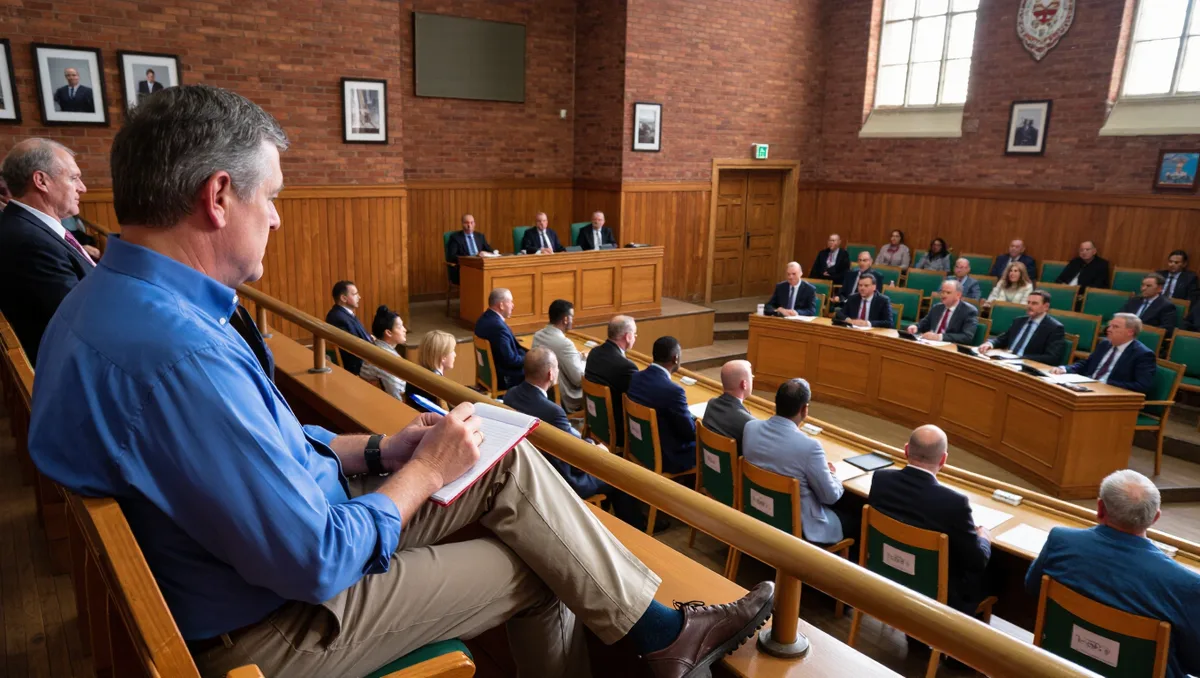
The committee stage is where the real filtering happens. The chamber's rules route each bill to the committee with jurisdiction over its subject — a tariff bill to Ways and Means, a spending bill to Appropriations. The committee can hold hearings, summon witnesses, and mark up the text line by line. It can also do nothing at all, and that is the most common outcome: a bill that never reaches the floor simply expires when the Congress ends.
If a committee advances a bill, it files a report explaining the text and usually sends it to the full chamber with a recommendation. In some legislatures, committee scrutiny is formalized even earlier. The UK practice of pre-legislative scrutiny puts a draft bill before a parliamentary committee before formal introduction, and much of Scandinavia requires it. India routes drafts through the relevant ministry, then the Ministry of Law and Justice, then a Cabinet committee chaired by the prime minister.
For readers tracking a specific proposal, committee status is the honest progress bar. A bill "referred to committee" has barely begun; a bill "reported out" has cleared the stage where most proposals stop.
What do the "readings" on the floor actually mean?
The floor stages carry names left over from an era when clerks literally read bills aloud. As the same overview notes, the bill is no longer read out in full, but the motions still refer to the historic practice. The sequence runs roughly: a first reading, where the proposal is formally presented with minimal discussion; a second reading, where general debate and amendment happen; and a third reading, where the chamber votes on the bill as a whole.
Amendments are the substance of the second reading. This is where a bill gains exemptions, loses provisions, and picks up the compromises that later define it. A chamber can also vote a bill down here outright. In the Indian Parliament, the second reading is described as the stage where a bill "receives its final shape": general discussion first, then detailed committee scrutiny, then clause-by-clause consideration and a vote.
The practical takeaway: a floor vote on third reading is a vote on the amended text, which may differ meaningfully from what was introduced. Journalists and analysts should always compare the enacted text to the introduced text, not assume they match.
Why must both chambers pass the same text?
Because the Constitution requires it. If the House and Senate pass different versions, the bill cannot advance until the differences are resolved. The traditional mechanism is a conference committee, where members of both chambers negotiate a single compromise text that each chamber must then approve again without further amendment.
This stage is a second filtering point, and a dangerous one for a bill's momentum. A compromise that satisfies negotiators can still fail on the floor of either chamber. Budget legislation takes a specialized route: the budget reconciliation process lets one party move fiscal provisions with a simpler Senate vote, which is why contested tax and spending measures are often folded into it — our earlier explainer covers the budget reconciliation process in detail.
The analysis: the identical-text rule is the structural reason legislative outcomes are unpredictable even when one party holds both chambers and the White House. Any member of either chamber can be the holdout at the final step, and the final step comes after months of work. What would change that reading is a change in chamber rules — for instance, procedures that let one chamber simply accept the other's text without a conference.
What does the president do with a passed bill?
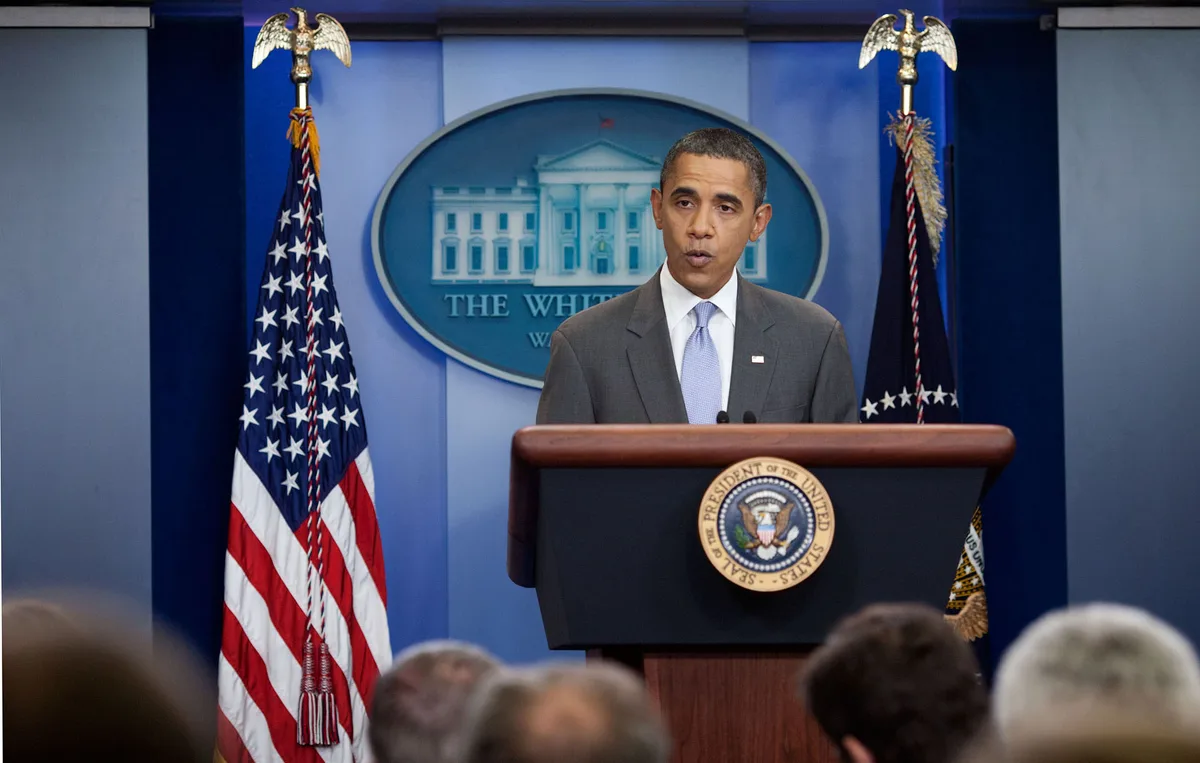
Once both chambers agree, the bill goes to the president, who can sign it into law, veto it, return it for reconsideration, or decline to act. A veto returns the bill to Congress, where both chambers can override it with the required supermajority — a high bar, which is why most vetoes stand. The enacted bill is then an act, or statute, and enters the code of laws.
Passage is not the end of the policy story, only of the legislative one. A statute usually directs agencies to write the detailed rules that put it into effect, a separate process with its own notice-and-comment steps — see our walkthrough of how federal rulemaking works and how the Federal Register turns rules into law. The statute's fiscal assumptions also face scoring: our explainer on what the Congressional Budget Office actually does covers how cost estimates shape the debate before a vote.
How does the U.S. path compare with other legislatures?
The comparison clarifies what is distinctive about the American filter. In Westminster systems, a bill typically moves through first reading, second reading, committee stage, report stage, third reading, consideration by the opposite house, and royal assent — a formal approval by the head of state that is, in practice, automatic. In the U.S. system, the head of state's approval is a real decision with a real override mechanism.
Canada adds a bilingual requirement: federal bills are always presented in both English and French. Civil-law countries frame the distinction differently, calling a government-introduced proposal a "law project" and a private member's version a "law proposition." The vocabulary differs; the underlying sequence — introduction, scrutiny, amendment, vote, second chamber, executive or head-of-state assent — is broadly shared.
What this means for readers of legislative news
Three practical habits follow from the mechanics. First, locate the stage: "introduced," "reported out of committee," "passed the House," and "signed into law" describe very different levels of certainty. Second, expect the text to change; the version that becomes law is the one amended on the floor and reconciled between chambers. Third, remember the filter is the point. The stages are designed so that most proposals fail, and the ones that succeed have usually been reshaped by every gate they passed.
The evidence on the process is settled; what remains uncertain in any given case is political — whether the votes exist at each gate. That is not a prediction, just the structure. Every tariff, mandate, and spending program traced on this site began its life as a bill at one of these desks, and the procedural record is where its story can be checked.